Για αποστολή ηλεκτρονικού ταχυδρομείου εδώ christos.vas94@gmail.com.

Σελίδες

Εμφάνιση αναρτήσεων με ετικέτα Βουδισμός. Εμφάνιση όλων των αναρτήσεων

Δευτέρα 10 Ιανουαρίου 2022

Βουδδιστική «πνευματικότητα» και Ορθόδοξη πίστη


Βουδδιστική «πνευματικότητα» και Ορθόδοξη πίστη


π. Σωτήριος Αθανασούλιας


Οἱ βουδδιστικές αἱρέσεις στήν ἐποχή μας


 Μεταξύ τῶν πολλῶν αἱρετικῶν καί παραθρησκευτικῶν ὁμάδων, πού δροῦν τά τελευταῖα χρόνια στή χώρα μας, εἶναι και οἱ ποικίλες βουδδιστικές αἱρέσεις. Οἱ αἱρέσεις αὐτές ἐμφανίζονται, συνήθως, στίς δυτικές κοινωνίες ὡς φορεῖς μιᾶς ἄλλης, ὑψηλότερης δῆθεν, «πνευματικότητας». Ἄνθρωποι ἀπογοητευμένοι ἀπό τόν δυτικό τρόπο ζωῆς καί τά ἀδιέξοδά του, νέοι μέ γνήσιες πνευματικές ἀναζητήσεις, καταφεύγουν ἐκεῖ, μέ τήν ἐλπίδα νά ἀνακαλύψουν κάτι καλύτερο καί αὐθεντικότερο. Οἱ περισσότεροι, ὅμως, γίνονται θύματα τῆς προπαγάνδας καί τοῦ ἐντυπωσιασμοῦ τῶν αἱρέσεων αὐτῶν, οἱ ὁποῖες ἐμφανίζονται καί δροῦν μέ διάφορα προσωπεῖα, ὅπως θά δοῦμε στή συνέχεια.


Στή χώρα μας, οἱ βουδδιστικές αἱρέσεις ἐπιχειροῦν νά ἀντιπαραβάλλουν τίς διάφορες τεχνικές ἄσκησης καί διαλογισμοῦ πού χρησιμοποιοῦν, μέ τήν Ὀρθόδοξη πνευματικότητα. Σ’ αὐτόν ἀκριβῶς τόν σκοπό ἀπέβλεπε ἡ ἀπόπειρα γνωστῆς βουδδιστικῆς αἵρεσης νά ἱδρύσει μεγάλο μοναστικό Κέντρο (βουδδιστικό μοναστήρι) στόν Χολομῶντα τῆς Χαλκιδικῆς, στήν εἴσοδο σχεδόν τοῦ Ἁγίου Ὄρους. Ὅμως, στόν Ἑλλαδικό χῶρο, ἡ πνευματικότητα πού καλλιεργεῖται στό Ἅγιο Ὄρος, στά Ὀρθόδοξα μοναστήρια, σέ ἐνορίες κ.λπ., ἔχει ἰσχυρές βάσεις καί ἀποτελεῖ ζῶσα πραγματικότητα. Τό ἴδιο ἰσχύει καί στίς ὑπόλοιπες Ὀρθόδοξες χῶρες. Γι’ αὐτό ὑπάρχουν ἀκόμη ἰσχυρές ἀντιστάσεις στίς ὁμάδες, πού προβάλλουν ἄλλες μορφές «πνευματικῆς» ζωῆς. Ὡστόσο, κινδυνεύουν σοβαρά ὅσοι ἔχουν ἀποκοπεῖ ἤ ἀποξενωθεῖ ἀπό τή ζωντανή Παράδοση τῆς Ὀρθοδοξίας, ἐπηρεασμένοι ἀπό τό ρεῦμα τῆς δυτικῆς ἐκκοσμίκευσης καί ἀπό σύγχρονες ὑπερπροοδευτικές, δῆθεν, ἀντιλήψεις.


Εἶναι γεγονός, ὅτι στίς κοινωνίες τῆς Εὐρώπης καί τῆς Ἀμερικῆς ἡ ἄνθιση τῶν βουδδιστικῶν αἱρέσεων, ἀλλά καί κάθε εἴδους θρησκευτικῶν ὁμάδων ἀνατολικῆς προέλευσης, εἶναι κάτι φυσικό καί ἀναμενόμενο. Ὁ δυτικός πολιτισμός, μέ τήν κατεύθυνση πού ἀκολούθησε μετά τήν Ἀναγέννηση καί τόν Διαφωτισμό, ἀρνήθηκε τίς χριστιανικές ρίζες του καί κάθε ἀναφορά στόν Θεό. Ἡ «πνευματικότητά» του συρικνώθηκε στά στενά ὅρια τῆς ἀνθρώπινης λογικῆς. Ὁ Θεός, ἀκόμη καί ὅταν δέν ἀπορρίπτεται, εἶναι ἕνα ἁπλό περιεχόμενο τοῦ ἀνθρώπινου λόγου. Ὁ ἄνθρωπος πίστεψε ὅτι μόνο μέ τόν λόγο καί μέ τίς δικές του δυνάμεις θά λύσει ὅλα του τά προβλήματα, τά προσωπικά, τά κοινωνικά, τά παγκόσμια. Ὅμως, τά προβλήματα καί τά ἀδιέξοδα παραμένουν, αὐξάνονται καί πολλαπλασιάζονται, μέ ἀποτέλεσμα νά δημιουργεῖται ἕνα τεράστιο πνευματικό κενό καί νά κυριαρχεῖ μιά ἀπέραντη ἀπογοήτευση. Αὐτό ἀκριβῶς τό κενό ἐπιχειροῦν νά καλύψουν οἱ σύγχρονες αἱρέσεις.


Κάποιες βουδδιστικές ὁμάδες προσπαθοῦν νά συμβιβάσουν τήν Ὀρθόδοξη πνευματικότητα μέ τίς διδασκαλίες καί τίς τεχνικές τοῦ Βουδδισμοῦ. Ἰσχυρίζονται ὅτι δέν ὑπάρχουν οὐσιαστικές διαφορές μέ τόν Χριστιανισμό καί ὅτι ὁ Ἰησοῦς Χριστός ἦταν ἕνας «φωτισμένος» ἄνθρωπος, ὅπως καί ὁ Βούδδας. Ἐπειδή ὅλα αὐτά προκαλοῦν τεράστια σύγχυση μεταξύ τῶν Ὀρθοδόξων πιστῶν καί συνιστοῦν σοβαρό πνευματικό κίνδυνο, εἶναι ἀπαραίτητο νά δοῦμε τί ἀκριβῶς εἶναι ὁ Βουδδισμός καί ποιός ὁ χαρακτήρας τῆς «πνευματικότητας» πού προωθεῖ. Ἕνας ἐπί πλέον λόγος, πού καθιστᾶ ἀναγκαία τήν ἀναφορά στό θέμα, εἶναι ἡ ραγδαία ἐξάπλωση τῶν βουδδιστικῶν ὁμάδων ἀκόμη καί στήν περιοχή μας, καθώς καί ἡ προσπάθεια πού γίνεται νά ἱδρυθεῖ μοναστικό Κέντρο (βουδδιστικό μοναστήρι) σέ περιοχή τῆς Ἀρκαδίας.


Ὁ Βουδδισμός καί οἱ ἀντιλήψεις του


Ὁ Βουδδισμός εἶναι θρησκεία, χωρίς συγκεκριμμένη διδασκαλία καί κοινῶς ἀποδεκτά δόγματα. Συνίσταται σέ πολλές σχολές, τάσεις καί πρόσωπα, μέ ἀντιλήψεις πού παρουσιάζουν μεγάλες διαφορές μεταξύ τους. Ὡστόσο, ὑπάρχουν κοινά στοιχεῖα σέ ὅλες τίς βουδδιστικές κινήσεις. Ὅλες τιμοῦν τόν ἱστορικό Βούδδα, δηλαδή τόν πρίγκιπα Σιντάρτα Γκαουτάμα, πού ἔζησε στό σημερινό Νεπάλ πιθανώτατα ἀπό τό 563 ὡς τό 488 π.Χ., καί ἀποδέχονται τίς βασικές ἀντιλήψεις του γιά τόν πόνο καί τή θεραπεία του. Οἱ βουδδιστές πιστεύουν ὅτι ὁ Σιντάρτα Γκαουτάμα, ἀφοῦ «φωτίστηκε» ὁ ἴδιος («βούδδας» σημαίνει «φωτισμένος»), παρέδωσε μιά διδασκαλία ἤ μέθοδο, πού ὁδηγεῖ στόν «φωτισμό» καί στή «λύτρωση». Κάθε ἄνθρωπος μπορεῖ νά γίνει «βούδδας», δηλαδή «φωτισμένος».


Ἡ διδασκαλία αὐτή συνοψίζεται σέ τέσσερις «εὐγενεῖς ἀλήθειες», πού εἶναι οἱ ἑξῆς: α) Ἡ ζωή εἶναι πόνος. Κατά τή διαπίστωση τοῦ Βούδδα, ὅλα στή ζωή εἶναι ἐπίπονα: ἡ γέννηση, ὁ θάνατος, ἡ ἀσθένεια, ὁ χωρισμός ἀπό ἀγαπημένα πρόσωπα, ἡ μή ἱκανοποίηση τῶν ἐπιθυμιῶν μας. β) Αἰτία τοῦ πόνου εἶναι ἡ ἐπιθυμία. Πρόκειται γιά τήν ἐπιθυμία ἤ τή δίψα γιά τήν ἴδια τή ζωή. Αὐτή ὀφείλεται στήν ἄγνοια ὅτι τό ἐγώ μας δέν εἶναι κάτι ἀληθινά ὑπαρκτό καί ὅτι οὔτε τά πράγματα πού μᾶς περιβάλλουν εἶναι ὄντως ὑπαρκτά. Ἡ μεγαλύτερη πλάνη στόν ἄνθρωπο εἶναι τό νά θεωρήσει τόν ἑαυτό του σάν αὐθύπαρκτη καί ἀνεξάρτητη ὀντότητα, κάτι πού προκαλεῖ τήν προσκόλληση στά πράγματα. γ) Θεραπεία τοῦ πόνου εἶναι ἡ ἐξάλειψη τῆς ἐπιθυμίας. Μέ τήν ἐξάλειψη τῆς ἐπιθυμίας ἐξαλείφεται καί ὁ πόνος. Αὐτό ἐπιτυγχάνεται ὅταν ἀντιμετωπιστεῖ ἡ ρίζα ὅλων τῶν προβλημάτων, πού εἶναι ἡ ἄγνοια. Ἡ γνώση τῆς ἀληθινῆς φύσης μας θά μᾶς ἀπελευθερώσει ἀπό τήν ἀτέρμονη ἁλυσίδα γεννήσεων καί θανάτων, ἡ ὁποία στίς ἀνατολικές θρησκεῖες ὀνομάζεται «σαμσάρα». δ) Ἡ μέθοδος γιά τήν ἐξάλειψη τῆς ἐπιθυμίας εἶναι ἡ «ὀκταπλή ὁδός». Αὐτή συνίσταται στήν ὀρθή ἀντίληψη, ὀρθή ἀπόφαση, ὀρθή ὁμιλία, ὀρθή συμπεριφορά, ὀρθή ζωή, ὀρθή προσπάθεια, ὀρθή σκέψη καί ὀρθό διαλογισμό.


Εἶναι σαφές ὅτι, ὅσο «εὐγενεῖς» καί ἄν φαίνονται οἱ θεμελιώδεις «ἀλήθειες» τοῦ Βουδδισμοῦ, προϋποθέτουν μιά βαθιά ἄρνηση γιά τή ζωή, πού ἰσοδυναμεῖ μέ πνευματική καί φυσική αὐτοκτονία. Ὅλη ἡ ζωή ἀξιολογεῖται ἀρνητικά καί θεωρεῖται χωρίς κανένα ἀπολύτως νόημα, ἐνῶ ἡ ἐπιθυμία γιά ζωή ἀπορρίπτεται ὡς ρίζα κάθε κακοῦ. Κάθε ἀνθρώπινη δραστηριότητα κρίνεται ἀρνητικά, γιατί ἐνισχύει τή δίψα γιά ζωή. Ἰδανικό εἶναι ἡ ἀπραξία καί ἡ ἀποχή ἀπό τό κοινωνικό γίγνεσθαι. Καί μόνο αὐτή ἡ ἀντίληψη θέτει τόν Βουδδισμό σέ χῶρο ἐντελῶς ἀσυμβίβαστο μέ τόν Χριστιανισμό, ἀλλά καί μέ τίς ἀρχές τοῦ σύγχρονου πολιτισμοῦ.


Γιά κατανοήσουμε τή βουδδιστική πίστη, πρέπει νά γνωρίζουμε ὅτι ὁ Βουδδισμός προῆλθε ἀπό τούς κόλπους τοῦ Ἰνδουϊσμοῦ καί διατηρεῖ τίς βασικές ἀντιλήψεις του γιά τόν κόσμο. Ἔτσι, ὅλες οἱ βουδδιστικές ὁμάδες δέχονται τίς διδασκαλίες γιά τή μετενσάρκωση καί τό κάρμα. Μετενσάρκωση εἶναι ἡ ἀντίληψη ὅτι ἕνα ὄν, μετά τόν σωματικό του θάνατο, ἐπανέρχεται στή ζωή μέ ἕνα ἄλλο σῶμα. Αὐτό γίνεται ἄπειρες φορές, μέ ἀποτέλεσμα τά πάντα νά ἐγκλωβίζονται σέ ἕναν κύκλο γεννήσεων καί θανάτων («σαμσάρα»). Ἡ μορφή μέ τήν ὁποία θά γίνει ἡ ἑπόμενη μετενσάρκωση ἐξαρτᾶται ἀπό τό κάρμα. Αὐτό εἶναι μιά οὐσία, θετική ἤ ἀρνητική, πού συσσωρεύει κάποιος μέ τίς πράξεις του, τίς καλές ἤ τίς κακές. Τό κάρμα συσσωρεύεται ἀπό τήν παροῦσα καί τίς προηγούμενες ζωές καί ἀκολουθεῖ στίς ἑπόμενες. Ἀπ’ αὐτό ἐξαρτᾶται, ἄν κάποιος ἐπανέλθει στή ζωή ὡς ἄνθρωπος, ὡς ζῶο ἤ ὡς «θεός» («θεοποιημένος» ἄνθρωπος). Ὁ Βουδδισμός δέν ἀποδέχεται τήν ὕπαρξη Θεοῦ ἤ θεῶν, ἀλλά μόνο τήν ὕπαρξη «θεοποιημένων» ἀνθρώπων, δηλαδή κάποιων πού ἔφτασαν στόν «φωτισμό» ἤ στήν «κατάσταση Βούδδα», γι’ αὐτό πολλοί ἀμφισβητοῦν ὅτι ὁ Βουδδισμός ἀποτελεῖ θρησκεία.


Στόν ἄνθρωπο δέν ὑπάρχει μιά βαθύτερη πνευματική οὐσία, πού μεταφέρεται ἀπό ὕπαρξη σέ ὕπαρξη. Δέν ὑπάρχει ἡ ψυχή ἤ τό atman τοῦ Ἰνδουϊσμοῦ. Ὁ ἄνθρωπος εἶναι anata (μή ψυχή). Ὅ,τι μεταφέρεται, εἶναι μόνο ἡ τυφλή δίψα γιά ὕπαρξη, πού κατευθύνεται ἀπό τό κάρμα. Σκοπός τοῦ ἀνθρώπου εἶναι ἡ ἀπελευθέρωση ἀπό τόν τροχό τῆς σαμσάρα, δηλαδή ἀπό τόν κύκλο τῶν μετενσαρκώσεων. Γιά νά ἐξαλειφθεῖ ὁ πόνος, πρέπει νά σταματήσει ἡ γέννηση, καί γιά νά σταματήσει ἡ γέννηση πρέπει νά σταματήσει ἡ συσσώρευση πού προέρχεται ἀπό τίς κακές ἤ καλές πράξεις μας (κάρμα). Ὅταν κάποιος ἀπελευθερωθεῖ ἀπό κάθε προσκόληση, πού συσσωρεύει κάρμα, φτάνει στό «νιρβάνα», πού θεωρεῖται κατάσταση «εὐτυχοῦς ἀνυπαρξίας». Νιρβάνα εἶναι ἡ κατάσταση ἡ ἀπαλλαγμένη ἀπό τήν ἀτομική ὕπαρξη. Αὐτό σημαίνει ὅτι ἡ λύτρωση στόν Βουδδισμό ταυτίζεται μέ τήν πλήρη ἐξαφάνιση τοῦ ἀνθρώπινου προσώπου (ὅ,τι προηγουμένως ἀποκαλέσαμε πνευματική καί φυσική αὐτοκτονία).


Ὁ προορισμός αὐτός ἐπιτυγχάνεται μέ τήν προσφυγή στό «τριπλό καταφύγιο» ἤ χρησιμοποιώντας τίς τρεῖς «πολύτιμες πέτρες». Αὐτές εἶναι ὁ Βούδδας, τό Ντάρμα (ἡ διδασκαλία του) καί ἡ Σάνγκα (ἡ κοινότητα τῶν πιστῶν). Ὁ Βούδδας εἶναι ὁ δάσκαλος, πού δείχνει τόν δρόμο ἤ ὁ γιατρός. Τό Ντάρμα εἶναι ὁ δρόμος γιά τή φώτιση ἤ ἡ θεραπεία καί ἡ Σάνγκα εἶναι οἱ βοηθοί γιά τή φώτιση ἤ οἱ νοσοκόμοι. Στόν Θιβετιανό Βουδδισμό προστίθεται καί ἡ ἀπόλυτη ἐξάρτηση ἀπό τόν Λάμα, τόν πνευματικό «δάσκαλο» (γκουρού).


Βουδδιστικές σχολές καί αἱρέσεις


Οἱ ἐπιμέρους σχολές τοῦ Βουδδισμοῦ διαφοροποιοῦνται κυρίως ὡς πρός τή μέθοδο πού ὁδηγεῖ στή «φώτιση» ἤ στήν «κατάσταση Βούδδα» («κατάσταση Βούδδα» εἶναι ἡ «φώτιση»). Οἱ κυριώτερες εἶναι:


α) Ἡ Σχολή Χιναγιάνα (Μικρό ὄχημα). Εἶναι διαδεδομένη στήν Κεϋλάνη, τή Βιρμανία καί τήν Ταϋλάνδη καί δέχεται ὅτι ὁ ἄνθρωπος μπορεῖ νά λυτρωθεῖ μόνος του, χωρίς ἐξωτερική βοήθεια ἀπό Θεό ἤ θεούς ἤ ἄλλους ἀνθρώπους (σύστημα αὐτοσωτηρίας). Ἐπικεντρώνεται στήν ἀποφυγή ἀρνητικῶν πράξεων, πού συσσωρεύουν κάρμα, καί χρησιμοποιεῖ κυρίως τόν διαλογισμό, ὅπως καί ἄλλες βουδδιστικές σχολές. Ὁ διαλογισμός εἶναι ἕνα εἶδος «προσευχῆς» (ἀκριβέστερα, τεχνικῆς), πού χρησιμοποιοῦν οἱ ἀνατολικές θρησκεῖες, καί συνίσταται στήν πολύωρη συγκέντρωση τοῦ νοῦ σέ ἕνα συγκεκριμένο ἀντικείμενο.


β) Ἡ Σχολή Μαχαγιάνα (Μεγάλο ὄχημα). Εἶναι διαδεδομένη στήν Κίνα, τήν Κορέα, τήν Ἰαπωνία καί τό Βιετνάμ καί προβάλλει τό ἰδεῶδες τῶν Μποντισάτβα (φωτισμένων καί ὁλοκληρωμένων ὄντων). Πρόκειται γιά «δασκάλους» τοῦ παρελθόντος, πού εἶναι ἤδη στόν «φωτισμό» καί στό νιρβάνα, ἀλλά ἐπανέρχονται στή ζωή μέ τή θέλησή τους, γιά νά βοηθήσουν ἄλλους ἀνθρώπους νά ἀπελευθερωθοῦν ἀπό τόν κύκλο τῶν μετενσαρκώσεων. Χαρακτηριστική εἶναι ἡ διδασκαλία τῆς σχολῆς γιά τό «κενό» καί τήν «κενότητα». Τό «κενό» εἶναι ἡ «πρώτη φύση», ἡ ἀμετάβλητη ἀρχή καί ἡ πηγή κάθε ἀξίας, στήν ὁποία πρέπει νά ἐπιστρέψουμε. «Κενό» εἶναι ἡ ἔλλειψη αὐτούσιας ὕπαρξης, ἡ κατάργηση τῆς διάκρισης μεταξύ ὑποκειμένου καί ἀντικειμένου, ὕπαρξης καί μή ὕπαρξης, σωτηρίας καί μή σωτηρίας. Πρακτικά αὐτό σημαίνει καί κατάργηση τῆς διάκρισης μεταξύ καλοῦ καί κακοῦ: τό κακό εἶναι ἡ ἄλλη ὄψη τοῦ καλοῦ. Ἡ ἐμπειρία τῆς «κενότητας» ταυτίζεται μέ τόν «φωτισμό ἤ μέ τήν «κατάσταση Βούδδα».


γ) Ἡ Σχολή Βατζραγιάνα (Διαμαντένιο ὄχημα - Θιβετιανός Βουδδισμός). Πρόκειται γιά μορφή Βουδδισμοῦ, ἡ ὁποία, μέ ἀφετηρία τή βόρεια Ἰνδία, διαδόθηκε στό Θιβέτ, στό Νεπάλ καί ἀλλοῦ. Στό Θιβέτ ὁ Βουδδισμός ἐπικράτησε ἀπό τόν 7ο μ.Χ. αἰῶνα, ἐκτοπίζοντας τήν ἀρχέγονη θρησκεία Μπόν, πού πίστευε σέ πνεύματα καί δαίμονες. Τόν 11ο μ.Χ αἰῶνα ἱδρύθηκε ἡ μεγάλη μονή Σακύαπα, στόν ἑκάστοτε ἡγούμενο τῆς ὁποίας περιῆλθε ἡ ἀνώτατη πνευματική καί πολιτική ἐξουσία τοῦ Θιβέτ. Πνευματικοί «δάσκαλοι» τοῦ Θιβετιανοῦ Βουδδισμοῦ εἶναι οἱ Λάμα, πού θεωροῦνται ἐνσαρκώσεις τοῦ Βούδδα καί Μποντισάτβα, δηλαδή ἔχουν τήν ἱκανότητα νά ἐνσαρκώνονται συνειδητά μετά τόν θάνατό τους γιά τό καλό τῆς ἀνθρωπότητας. Σ’ αὐτούς, ἐκτός ἀπό ἀπόλυτη ὑποταγή, ἀποδίδεται καί λατρεία. Πιστεύεται ὅτι τά ροῦχα τους, τά κομμένα μαλλιά τους κ.λπ. μεταδίδουν κάποια ἐνέργεια ἤ «εὐλογία» καί ἔχουν «ἰαματικές ἰδιότητες». Οἱ μαθητές τά φοροῦν, συνήθως, ὡς φυλακτά. Σέ κάποιες περιπτώσεις ὁ μαθητής καλεῖται νά κάνει 100.000 μετάνοιες μπροστά στόν Λάμα ἤ στήν εἰκόνα του. Ἐπικεφαλῆς τους εἶναι ὁ Δαλάι Λάμα (Κοσμικός Ὠκεανός), ὁ ἀνώτατος πνευματικός καί πολιτικός ἡγέτης τοῦ Θιβέτ. Ὁ σημερινός, ἡλικίας 78 ἐτῶν καί 14ος στή σειρά Δαλάι Λάμα, φυγαδεύτηκε στήν Ἰνδία τό 1959, ὅταν τό Θιβέτ κατελήφθη ἀπό τούς Κινέζους καί ἀπό τότε ζεῖ ἐξόριστος ἐκεῖ. Θεωρεῖται ἐνσάρκωση τοῦ Μποντισάτβα Τσενρέζι καί πιστεύεται ὅτι ἔχει ξαναγεννηθεῖ πολλές φορές στό Θιβέτ. Ὁ Θιβετιανός Βουδδισμός πιστεύει στή συντόμευση τῆς ὁδοῦ πρός τή «φώτιση», μέσω μαγικῶν πρακτικῶν καί τεχνικῶν διαλογισμοῦ.


Ἐκτός τῶν παραπάνω, ὑπάρχουν καί ἄλλες μορφές Βουδδισμοῦ, ὅπως ὁ Ταντρικός Βουδδισμός καί τό Ζέν.


Βουδδιστικά κέντρα στήν Ἑλλάδα


Στή Δύση διαδίδονται κυρίως μορφές τοῦ Θιβεττιανοῦ Βουδδισμοῦ καί στή χώρα μας δροῦν πολλές τέτοιες ὁμάδες, πού ἐμφανίζονται συνήθως μέ προσωπεῖα φιλοσοφικῶν ἤ ἐπιστημονικῶν σωματείων («Ἑταιρεία Ἀσιατικῶν Μελετῶν», «Κέντρο Θιβετιανῆς Φιλοσοφίας καί Διαλογισμοῦ» κ.ἄ.). Στούς τίτλους τῶν σωματείων αὐτῶν ἀπουσιάζει, συνήθως, ὁ ὅρος Ling, πού σημαίνει μοναστήρι. Ἔτσι, δέν γίνεται ἀντιληπτό ὅτι πίσω ἀπό τέτοια σωματεῖα μπορεῖ νά λειτουργεῖ ἕνα βουδδιστικό μοναστήρι ἤ «Κέντρο Τρίχρονης Ἀπομόνωσης», ὅπου τά μέλη ἐγκλείονται, χωρίς καμμία ἐπαφή μέ τόν ἔξω κόσμο γιά 3 ἔτη, 3 μῆνες καί 3 μέρες!


Γιά παράδειγμα, τό 1988 ἱδρύθηκε, μέ πρωτοβουλία τοῦ Δανοῦ Λάμα Ὄλε Νυντάλ, τό Κέντρο «Karma Berchen Ling» καί ἀγοράστηκε ἔκταση σέ περιοχή τῆς ὀρεινῆς Κορινθίας κοντά στό Δερβένι, μέ σκοπό τήν ἀνέγερση ναοῦ καί κτιριακοῦ συγκροτήματος γιά τήν ἐγκατάσταση βουδδιστῶν μοναχῶν. Ὡς ἐπίσημος φορέας του ἐμφανίζεται τό σωματεῖο «Διεθνής Σύλλογος Προστασίας τοῦ Περιβάλλοντος τῆς Ἑλλάδας». Ὅπως βλέπουμε, δέν ὑπάρχει καμμία ἀντιστοιχία μεταξύ ἑλληνικοῦ καί διεθνοῦς τίτλου τῆς ὀργάνωσης, ἐνῶ στόν ἑλληνικό τίτλο ἀπουσιάζει ὁ ὅρος Ling (μοναστήρι), ὅπως ἀπουσιάζει καί κάθε ἀναφορά στόν Βουδδισμό. Σύμφωνα μέ τό καταστατικό του, σκοπός τοῦ σωματείου εἶναι ἡ «ἀνάπτυξη τῆς ἀγάπης τῶν μελῶν τοῦ σωματείου ἀνεξάρτητα φύλου γιά τήν προστασία τοῦ περιβάλλοντος καί ἡ διάδοση στήν Ἑλλάδα καί στό ἐξωτερικό τῆς ἰδέας τῆς προστασίας τῶν ἑλληνικῶν δασῶν ἀπό τίς πυρκαϊές, τῆς ἀναδάσωσης καμένων δασῶν, τῆς αὔξησης τοῦ φυσικοῦ πρασίνου, καθώς ἐπίσης τῆς προστασίας τῶν ἑλληνικῶν ἀκτῶν ἀπό τήν ρύπανση»!


Κάτι ἀνάλογο συνέβη καί μέ τό βουδδιστικό μοναστήρι στόν Χολομῶντα τῆς Χαλκιδικῆς τῆς ὀργάνωσης «Karma Rik Drol Ling», τῆς ὁποίας ὁ ἑλληνικός τίτλος εἶναι «Κέντρο Πρακτικῆς Φιλοσοφίας καί Ψυχολογίας» (1989). Ἡ ὀργάνωση ἐξαπάτησε τίς ἑλληνικές ἀρχές, ἐξασφαλίζοντας πολεοδομική ἄδεια γιά «παραθεριστικές κατοικίες»!


Ὀρθοδοξη πίστη καί Βουδδισμός


Εἶναι φανερό ὅτι οἱ βασικές ἀντιλήψεις τοῦ Βουδδισμοῦ ἔρχονται σέ πλήρη ἀντίθεση μέ θεμελιώδεις χριστιανικές ἀλήθειες. Ὁ Χριστιανισμός πιστεύει ὅτι ὑπάρχει ἕνας καί μόνο Θεός, πιστεύει στήν ὕπαρξη καί τήν ἀθανασία τῆς ψυχῆς, πιστεύει ὅτι ὁ Χριστός εἶναι ὁ Υἱός τοῦ Θεοῦ, ὁ μόνος Σωτῆρας καί Λυτρωτής τοῦ κόσμου, ἀντιλήψεις, τίς ὁποῖες σαφῶς ἀπορρίπτει ὁ Βουδδισμός. Οἱ βουδδιστικές αἱρέσεις πλήττουν τό κέντρο τῆς χριστιανικῆς πίστης, ὑποβιβάζοντας τό πρόσωπο τοῦ Ἰησοῦ Χριστοῦ στό ἐπίπεδο ἕνος «φωτισμένου» ἀνθρώπου, ὅπως ὁ Βούδδας ἤ οἱ Λάμα καί οἱ Μποντισάτβα τῶν βουδδιστικῶν ὁμάδων. Μεταξύ Ἰησοῦ καί Βούδδα δέν ὑπάρχει καμμία σχέση. Ἀστεῖος εἶναι καί ὁ ἰσχυρισμός πού διακινεῖται ἀπό κάποιους κύκλους, ὅτι ὁ Ἰησοῦς, στό διάστημα τῆς ζωῆς του γιά τό ὁποῖο δέν ὑπάρχουν πληροφορίες στά Εὐαγγέλια, πῆγε στό Θιβέτ, μυήθηκε στίς «ἀλήθειες» τοῦ Βουδδισμοῦ καί ἀπέκτησε τήν ἱκανότητα νά κάνει θαύματα. Ὅπως εἴδαμε, τήν ἐποχή τοῦ Χριστοῦ στό Θιβέτ ὑπῆρχε μιά ἀρχέγονη πίστη σέ πνεύματα καί δαίμονες, ὁ δέ Βουδδισμός ἔφτασε ἐκεῖ 7 αἰῶνες ἀργότερα!


Οἱ τεχνικές τοῦ Βουδδισμοῦ (ἡ δῆθεν ἀνώτερη βουδδιστική «πνευματικότητα»), ἐκτός τοῦ ὅτι ὁδηγοῦν στήν καταστροφή καί διάλυση τοῦ ἀνθρώπινου προσώπου, τό ὁποῖο ἀκριβῶς ἐπιχειρεῖ νά διασώσει ἡ Ὀρθοδοξη πίστη (αὐτό τό νόημα ἔχει ἡ χριστιανική ἔννοια τῆς «σωτηρίας»), εἶναι ἐπικίνδυνες ἀπό κάθε ἄποψη. Ἄς θυμηθοῦμε τήν τρομοκρατική ἐπίθεση τῆς βουδδιστικῆς αἵρεσης «Ὑπέρτατη Ἀλήθεια» μέ δηλητηριῶδες ἀέριο στό μετρό τοῦ Τόκυο τόν Μάρτιο τοῦ 1995, μέ 10 νεκρούς καί 5.000 τραυματίες! Ἄν καί ἡ περίπτωση εἶναι ἀκραία, προϋποθέτει τή βουδδιστική ἀντίληψη ὅτι οὔτε ἡ δική μας ζωή, οὔτε ἡ ζωή τῶν ἄλλων ἔχει κάποια ἀξία. Οἱ μέθοδοι αὐτοσωτηρίας τοῦ Βουδδισμοῦ ἀκολουθοῦν ἀκριβῶς τήν προτροπή τοῦ διαβόλου στούς Πρωτοπλάστους: «ἔσεσθε ὡς θεοί», δηλ. μπορεῖτε νά γίνετε θεοί, χωρίς τή βοήθεια τοῦ Θεοῦ. Πρακτικά, ὁ Βουδδισμός εἶναι ἕνα κράμα εἰδωλολατρίας (ἀνθρωπολατρίας) καί δαιμονολατρίας.


Ἡ σύγκριση τῆς Ὀρθόδοξης πνευματικότητας μέ τίς ποικίλες βουδδιστικές τεχνικές ἀποκαλύπτει τή σαφή ὑπεροχή τῆς πρώτης. Καί ἡ Ὀρθοδοξία κάνει λόγο γιά φωτισμό, ἀλλά ἐδῶ πρόκειται γιά τόν φωτισμό τοῦ Ἁγίου Πνεύματος, πού ἀκολουθεῖ τή διαδικασία τῆς κάθαρσης ἀπό τά πάθη. Ὁ φωτισμός αὐτός δέν καταλύει τό ἀνθρώπινο πρόσωπο, ἀλλά ἀντίθετα τό θεραπεύει ἀπό τή νόσο τῆς ἁμαρτίας, τό ἀναδεικνύει καί τό ἀποκαθιστᾶ στήν αὐθεντικότητά του. Κατά τήν Ὀρθόδοξη Παράδοση, ὁ ἄνθρωπος, ἀγωνιζόμενος ἐναντίον τῶν παθῶν καί τῆς ἁμαρτίας καί μετέχοντας στά Μυστήρια τῆς Ἐκκλησίας, μπορεῖ νά δεῖ τόν Θεό ἀπό τήν παροῦσα ζωή, ὡς θεῖο καί ἄκτιστο Φῶς, καί νά μετέχει στίς ἄκτιστες Ἐνέργειές Του. Στήν κατάσταση αὐτή, πού ὀνομάζεται «θεώση», φτάνουν οἱ Ἅγιοι τῆς Ἐκκλησίας, διατηρῶντας ὅλα τά στοιχεῖα τῆς προσωπικότητάς τους. Οἱ Ἅγιοι δέν εἶναι ἀλλοιωμένες προσωπικότητες, ἀλλά ὁλοκληρωμένες προσωπικότητες.


(Κείμενο ἀπό τό ἔντυπο «Ὀρθοδοξία καί αἵρεσις» τῆς Ἱερᾶς Μητροπόλεως Μαντινείας καί Κυνουρίας, τεῦχ. 83, Ἀπρ. - Ἰουν. 2013).


Πηγή 

Για τον Βουδισμό


 - Ο Βουδισμός έχει μερικές αλήθειες, αλλ’ έχει μια ανθρώπινη αλήθεια, που φθάνει μέχρι το “μηδέν”, δηλαδή με την αυτοσυγκέντρωση-διαλογισμό οδηγεί τον άνθρωπο προς το μη όν από το οποίο δημιουργηθήκαμε. Πρόκειται για μια υπαρξιακή αυτοκτονία. Ο Χριστός μας οδηγεί στην θέωση, την κοινωνία με τον Τριαδικό Θεό.

- Μερικοί λένε ότι ο Βουδισμός δεν έχει σχέση με τον δαιμονισμό. Όμως, αυτοί που ομιλούν έτσι, γνωρίζουν τον Βουδισμό από τα βιβλία και ομιλούν θεωρητικά. Η πράξη είναι διαφορετική.

- Μερικοί λένε ότι με τον διαλογισμό αποκτούν μια ηρεμία. Αυτό φαίνεται εξωτερικά σαν καλό, αλλά οι άνθρωποι αυτοί διακατέχονται από οίηση και καταλήγουν σε σαρκικό πόλεμο. Ακόμη και αν ξεφύγουν από τον Βουδισμό, πάλι έχουν σαρκικό πόλεμο. Αυτό δείχνει την σατανικότητα της μεθόδου αυτής.

- Όταν διαβάζη κανείς διάφορα βιβλία, ψυχολογικά, βουδιστικά, δεν θα μπορέσει ποτέ να αποκτήσει καθαρή αίσθηση της Ορθοδοξίας.


Άγιος Γέροντας Σωφρόνιος του έσσεξ


Πηγή 

Τρίτη 17 Ιουλίου 2018

The Great River: Christianity and Paganism


From Death to the World #XXVI
By Deacon Joseph Magnus Frangipani

By the time I arrive in New Delhi, leaping pockets of green slime lining the bus terminals, sailing through smoke of burning bodies, backpacking dog-infested cobblestone streets of Tibetan refugee camps; before happening upon remote caves at the source of the Ganges, and discovering the wonders of the Prayer of the Heart; long before studying black magic in ashrams through Rishikesh and forking roasted vegetables smeared with butter and rose petal; before shooting back and forth across sage deserts of Idaho by astral projection and offering fruit, fire and rice before Krishna, Shiva and the goddess of death I will, periodically, disappear through the veil of shamanism.

I will appear on Spirit Mountain outside Eugene, Oregon, coated in rain and rags barefoot with a stick of incense behind my ear, offering our dog as sacrifice. With a handful of yak-bone beads and bright feathers, I chalk the occult patterns of yantras and sit inside them. Yantra, in Sanskrit, literally means “machine, contraption.” They adorn temple floors associated with specific demons and summon occult powers based primarily, but not exclusively, on Hindu astrology and numerology. Anything placed inside a yantra sits upon a spiritual trapdoor. Seated inside one of these “machines,” or yantras, you blast off – spiritually, mentally, sometimes physically – a willing conduit of demonic flight.

Mantras, the Sanskrit syllables inscribed on yantras, are similar to GPS coordinates for the practitioner, or phone numbers yoking us to whoever – or whatever – is on the other end. Similarly, diving into the black cauldrons of cartomancy, unfolding my Tarot deck summoning Thoth, the Egyptian god, I assumed knowledge of the future. So-and-so will meet you here on such-and-such date. This or that will happen. The astrological association for the pointer finger is Jupiter. This symbolizes power and authority, so wear a tin ring on that finger, and never gold. I concocted remedial tonics and teas from temples on moonlit nights. Sprinkle this on the forehead, rub that behind his ear. To strangers and friends it appeared I knew intimate patterns and cycles of desire, thought, auspicious dates and providential occurrences. The extraordinary becomes ordinary.

Holy Orthodoxy offers countless examples of demons appearing as angels. Determined as I am for direct experience, trusting without discernment everything ‘spiritual’ and seemingly non-material is good, I acted on my freedom without accountability. In Orthodoxy, we trust the prescribed medicine of Holy Tradition coming from Christ’s Body, the one and apostolic Church. We hold ourselves accountable before a spiritual father and confessor, distrusting so-called ‘spiritual experiences’ regarding ourselves unworthy.

In the spiritual life, especially when conditioned to accept strictly materialistic, ‘scientific’ and rational explanations for everything, you either embrace what amounts to atheism, or leap in the opposite direction. Reading hundreds of books on far-eastern mysticism and experiencing first-hand supernatural phenomenon in thousand-year Hindu temples and ashrams, it is hard, as Elder Sophrony admits in We Shall See Him As He Is, to rid oneself of aberrations of this kind. A practitioner of eastern traditions before returning to Christ, he says, “you are persistently haunted by the suspicion that the experiment was a failure because you were unable to strip yourself of all the transitory phenomena of cosmical experience. You ought to have ‘put off’ your personality, considering it merely a temporary form of existence that restricts at every level.”

This is to say, as according to Buddhism, if the cause of suffering is desire, and we must extinguish desire in ourselves, from an Orthodox perspective, we must commit spiritual suicide. We have to destroy the soul because her God-given energies yearn for union with the Divine. I could not do this. Meditation and yoga cleared and calmed the mind but it never healed the heart, and never unified me with Christ. It cannot, because the goal of yoga is self-divination, the opening of chakras so the 7th chakra, the crown chakra, blossoms and you realize that you and God are identical, and that truly, neither ultimately exist. The awakening of kundalini energy instrumental in Hinduism is depicted in yoga as awakening the serpent.

This is preciously the delusion satan, in the form of a serpent, cast around our forefather and foremother Adam and Eve. They chose self-deification, apart from God, choosing their will, their path, and rejecting the uncreated path Who is Christ. I have no doubt many leap off the rusted, sinking boat of western Christianity in search of bright and colorful fish. But the most colorful fish often are the most dangerous, the most poisonous.

It is early October. I find myself inexplicably drawn to Kalkaji Temple where the fearsome Kali – brandishing severed heads and hands, tongue lapping blood from a corpse – manifests inside a rock garlanded with tinfoil and smoke. Hinduism is a seemingly unending umbrella of many colors encompassing complementary and opposing ideas, personalities, enthusiastic rituals, the boundaries between the material and spiritual fluid and fleeting.

I splash barefoot through split coconuts, streams of water, flower petals and broken candies. Swamis appear and disappear before my eyes, children filed away in cages are draped in curtains of yoghurt, statues bleed. Outside, in a festival of lights, cows smeared with excrement and paint drink puddles of brown slime. The closer we draw near Kali’s throne in the garlanded rock, eyes roll upward and away. Tongues wag pink from mouths and the mind confuses and twirls like a blender. A leprous claw grabs me, spins a web of red string around my wrist, pushes me backward. It is late and I’m disoriented.

I disappear from the temple and board the nearest bus fifteen hours north for Dharamsala to the Dali Lama’s monastery. The abbot greets me with Tibetan yak butter tea and cookies. We discuss my work for the Tibetan National Library. The following week, I’m given astrological charts from the Dali Lama’s oracles living in Kangra valley. You see their lights roaming red over the evening hills. We don’t specify how or where, but you will suffer grave illness buried under your thirtieth year. Carts drag goat bones through the forest. Someone – or something – gathers cycles and patterns from my life. Yes, so-and-so greeted me here on such-and-such day with fire. Smear this across your abdomen, swallow those roots, never look with your left eye at someone in yellow.

All my life I wondered not whether a spiritual world exists, because I knew it existed – and not how it exists, but how I might enter that other world. I will disappear from the Pacific Northwest and return to India and discover Christ in the Himalayas. Kali shrieks and falls like lightning when the Prayer of the Heart erupts spontaneously, the red wrapping around my wrist cut away with a knife melting into campfire. The devil has power over those who hand their will over to him. This period was of extreme calm and focus. My personal, direct experience of Truth as someone who entered into human history, lived among us, and remains fully human but also fully God, now everywhere and entering personally into our lives, this experience and the Faith soon discovered in the pre-eternal Church is true enlightenment. Life in Christ is not only enlightenment, it surpasses the created states of mind and offers purification, illumination of heart and mind, and growing in likeness and union in God.

My journey into ancient Christianity amounts to thirty-eight years, continues like the migratory pattern of swifts, swallows and nightjars. I have long been interested why we struggle to escape the country of our birth and, not knowing any other language or culture, cast off into uncharted territory. I’ve noticed we tend to spiritually migrate in regular, seasonal movements, often east and west, between the conceptual and non-conceptual, along a flyway, between breeding and wintering grounds. But I am no longer fascinated by eastern traditions such as yoga and meditation, Buddhism, Hinduism, and the occult. I continue rejecting western Christianity as a paling shadow, embracing the constant light of Christ revealed through the ascetic and scriptural life peppered throughout Mount Athos, Romania, Serbia, Georgia and Russia, Greece, and all over the world, especially here, in North America where shadows fall day and night.

After backpacking frozen beaver ponds over Spruce Island, in Alaska, created lights gradually dimming and fading, warming myself against icons of the Mother of God, mind sharpening and pointing like a knife into bread; after discovering my spiritual father and confessor at seaside glaciers pouring incense at dawn, and losing the Prayer of the Heart, and falling and getting up, and falling and standing up; long after touching vestments of a Serbian bishop who suddenly removed from my eyes a kind of spiritual curtain, and I saw things of which I am unworthy to speak and write about; and spooning yoghurt with walnut and honey; after marrying a wonderful woman, raising children, graduating seminary, and periodically sailing across deserts to a monastery, I will, periodically, emerge from the Divine Liturgy carrying Christ on the altar of my heart.

What can I say? Behind every crucifixion is a resurrection.

It is necessary for us to suffer, not that we seek it out but that we don’t always run away, voluntarily following Christ to His crucifixion, studying not the minds and ideas of men but hearts of saints struggling to conform to God’s revelation.

Suppose we fast from everything, emptying clutter. The unquenchable desire remains, with our whole being we thirst to know and be made known by God. The Lord stands at the chamber of the heart, never forcing Himself, always waiting for us. He leaves when we say leave, and returns as soon as we lean inward, hear Him, and answer the Door. Then our Christ holds out His robe of divine grace, drapes it over the heart, and places a ring on the finger, and dines with us. In the Old Testament we hear His voice, My son, give Me thy heart. Fed from this mystical honeycomb, the soul is no longer distressed or curious of far away places because she experiences Christ everywhere. She at last reaches the great river, the fountain of immortality.

Within the womb of Holy Tradition, you’ll uncover great joy and suffering. You’ll taste Christ the healer and physician of souls and bodies, and a gentle warming in the heart will arrive, or it won’t. Our experiences in the Church are allowed and given by God for our repentance, so that wandering the far country we come to ourselves, body and soul together, preparing us so that we see the Light that illumines the saints of ancient Christianity walking in our midst. In this great cloud of witnesses, it is not a question of whether we see God, but whether Christ is the healing Light and not darkening fire sailing through the smoke of this world.

source 

Τρίτη 27 Φεβρουαρίου 2018

The Uncreated Map: Christ as the Light of Yoga


By Subdeacon Joseph Magnus Frangipani

I’m reminded of pilgrims at the Himalayan foothills seeking passage around the icy mouth of the Ganges River. Among these hikers were two very different men, one an intelligent geologist and the other a simple backpacker.

The geologist put every trust in his mind.

As he told others, “I know all there is about the composition of mountains and valleys. I know how they’re formed and why they’re here. Look, I understand everything and really don’t need backcountry camping lessons, nor do I have time to get in shape for this journey.”

So, he left unprepared, but very confident for the hard journey ahead.

Meanwhile, the simple backpacker didn’t count on his intelligence alone. Rather, he worked out every day, getting his body into good health, also while getting to know the locals who passed through these mountains. He learned where to find shelter, what places and people to avoid, and knew precisely where he was going. He was very humble about this undertaking.

At the first snowstorm the first man panicked. He forgot all about geology and his journey grew difficult and painful. The simpler man, however, brought to mind what he learned from those before him, drawing on ancient wisdom and, remembering his maps, actually wound around these mountains with much effort but safely.

One man arrived from his journey to new land.

The proud man was never found.

The secret closet, man’s heart, is the starting place where we embark on this journey. It is concealed by many thorns and bushes, within the folds of our passions, thoughts and ego. Our life, then, may seem a Russian nesting doll. When Christ comes like a gardener, we may not recognize Him. Sometimes it is only when we don’t experience Him, though, that like the Prodigal Son we remember His bread and turn to face Him, which is what repentance is all about.

When we taste life apart from Him, which is not truly life but pigs and husks, we experience a foretaste of hell. This often has profound effects upon a person. One may experience a fear of God, depending of course to the degree they are oriented toward the spiritual life, and this fear encourages us to depend on His will, on His love and grace, developing humility so that entrust our minds and hearts once more to the Holy Trinity. Each time we reorient ourselves, we experience a minor death, where we can rightfully say with St. Paul, that I die daily, and that to die is to gain, for when the hour of death comes to us, we will not die, but live eternally within the Lord.

So it is perhaps helpful here to remember our soul as depicted in Church iconography, if you remember, in iconography, the soul is often portrayed as a swaddled infant held in the arms of our Father in Christ. In this way, we remember our dependence upon God and cling to our Father, leaping into His arms and carried away by His love.

In these ways, we continue uniting ourselves to Christ.

________

Now, during the service of Baptism and Chrismation, we see our union with Christ expressed in no uncertain terms. For instance, after renouncing and spitting on Satan, we announce three times we’ve united ourselves to Christ. It is Orthodox baptism – and Orthodox baptism alone – which begins to fulfill the saving work of our Lord in the human person. Here, we begin restoration of the true self and recovery from a state of corruption – perhaps, we might say the ’embryo’ sparks to life.

Contrast all this against the phenomenon coined as yoga.

Whereas in the Orthodox Church we’re called to and affirm ongoing union with Christ, yoga – which means ‘yoke,’ to bind or harness yourself to something, to establish an intricate union with – is explicitly union with someone or something other than Christ.

In learned and devoted practitioner of yoga understands techniques often involve incantations to Hindu deities, physical postures named after and dedicated to Hindu gods and goddesses, and the awakening of Kundalini Shakti – a created energy represented by a coiled serpent dormant in the spine. The creator of yoga, according to yoga, is Shiva the god of destruction.

Nevertheless, in America yoga is likened to stretching but yoga is not stretching. Yoga is a physical, mental and spiritual discipline rooted in Vedic philosophy and Hindu religion. It provides tools to unlock, or rather unblock, mysterious energies very foreign to the Orthodox Christian. Stretching is merely the physical relaxation of a muscle and little, or nothing else.

In yoga, many poses have names of gods and goddesses. For example, the pose called Viranchyasana – after the Hindu deity Viranchya – is dedicated to Brahma. Vishnua is a popular god mentioned in the Vedas and there are several poses dedicated to his avatars, to his human and animal incarnations. Then there’s Ananta, a god who even took the form of a snake, and we have the Anantasana pose named after him. The snake then reincarnated into a human, into Patanjali, author of the yogic bible, the Yogic Sutras of Pantanjali.

__________

Many yogic body positions also directly correspond to chakras. A chakra is what we might refer to as an invisible, spiritual pressure point. In the same way we might rub a pressure point on the physical body increasing blood or lymphatic flow, yoga contends we have a subtle body, too. Yogic postures sort of massages these points, encouraging particular channels to open up thereby attracting ‘spiritual energy.’

A lot of yogis talk about how the universe, and everything within it, is in fact musical, vibratory, and relates to frequency. For example, saying a mantra gets you in touch with some beings, a guru, a god or goddess, on one frequency, in one dimension. Putting yourself into a particular asana will also put out a vibration, a calling card, attracting energy – various subtle energies, – the way we might put a light in the window attracting someone’s attention. It doesn’t matter whether we realize this or not, believe it or not, the reality is the soul and body are intricately linked.

Yogic poses, rooted in the Hindu pantheon of gods and goddess, with names of gods and goddesses, working on subtle areas of your body and mind, are dangerous. You know, perhaps we can look at yogic poses as a sort of combination to a lock. Each asana or pattern of asanas, certainly over time, are supposed may unlock various energies.

Now this is very important: in the vast world of yoga, we find many methods of ‘picking’ these locks, many back doors corresponding to varieties of hidden powers. These powers influence ourselves and others, and are known even in yoga as white magic and black magic. I was personally initiated into these arts, in the Yoga Capital of the World.

One goal within this discipline of yoga is unlocking these chakras, these gates, within the body and soul, inviting energy to climb within you. This energy is often depicted and described as a coiled snake, known as Shakti, or kundalini, and the purpose here as most everywhere in yoga is to raise this energy into the mind so we attain the realization we are identical tGod.

So what are we yoking ourselves to during yoga?

Asanas, and really all signs and patterns within yoga – especially mantras – are false lights, like those of deep sea angler fish. This reminds me. In a yoga class, it’s not unusual to hear Sanskrit mantras and sometimes be invited by instructors to chant them, especially in the beginning and at the end of the session. These mantras might not be spoken by you, but rather to you, played through music played in the background, or depicted on clothing and on temple, ashram and yoga studio walls.

Just as the sign of the Cross corresponds to the Giver of Life, Jesus Christ, signs prevalent throughout yoga correspond to the influence of Shiva, Lord of Death. These signs and patterns include diagrams and amulets supposedly possessing occult powers in astrological and magical forms, and are known as mantras, mandalas, and yantras.

As Orthodox Christians, we should never attend schools grounded in satanic philosophy. We certainly shouldn’t twist our bodies and minds into postures dedicated to satan, even if we don’t worship him. The devil himself appears as an angel of light.

Like moths, we are often attracted to false, created lights. When Christ comes like a gardener, will we recognize Him? There is only one pattern of life, one Uncreated Map for mankind, Who is the Truth, the Way, and the Life. He is the Incarnate Logos, the Christ the God-Man.

Other Articles by Subdeacon Joseph:
The Impossibility of Aloneness: When Christ Found Me in the Himalayas Hidden Fire: Orthodox Perspectives on Yoga

source

Τετάρτη 31 Μαΐου 2017

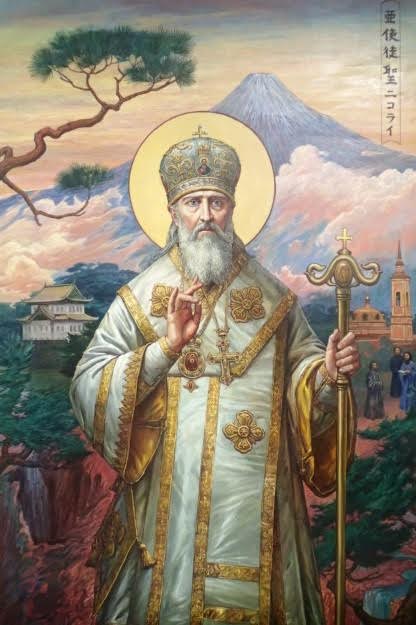
ST. NICHOLAS OF JAPAN ON BUDDHISM, CONTINUED

Priest George Maximov

Continued from Part 1


Excerpts from his diary supplement our understanding of how St. Nicholas related to Buddhism. Here observations are also marked by the fact that they were made by a practicing missionary.
Thus it is with, for example, the theme of the Buddhist priests’ resistance against Christianity. The saint calls them outright “enemies of Orthodoxy”, who “do not miss any opportunity to take advantage of existing circumstances in order to trouble the Orthodox and weaken Orthodoxy—which, however, they have thus far not been able to do.”[1]

“In their sermons, the bonza revile Christianity with all their might, but through this they are only showing their own confusion, and that they do no know what to do” (II, 205). The catechist “Paul Okamura related that bonza in plainclothes often come to him asking about Christianity, but then only use the knowledge they gather to pervert it and make it food for derision. Around [catechist] Matsuda the bonza have formed regular gatherings, always unbearably blaspheming against Christianity and forbidding others to listen to him. This, according to Matsuda, brings the exact opposite result: it only arouses people’s curiosity and they come to ask about Christianity” (II, 223).

It is worth noting that the holy hierarch was never perturbed by these displays of aggression from Buddhism, and considered it a sign of Buddhism’s inner weakness in the face of Christianity. He writes, “In Ebishima, an especially strong hatred against Christianity was aroused, and a society was even formed to defend Buddhism against Christianity; but this is only a sign that Christ’s teaching is beginning to more deeply occupy the people’s attention. As a counterweight there are no few pagans who, not yet even knowing about Christianity, become defenders of it against angry attacks” (III, 383). “In Nakatsu … the bonza were very troubled by the success of Christianity—they formed a union against Christianity, give sermons and revile it. Just in time! There are working for the good of Christianity by popularizing it; Buddhism has no defense against it” (IV, 31). And truly, soon the news came from Nakatsu of converts to Orthodoxy, “one of whom was a sworn Buddhist, and now he is an equally zealous Christian” (IV, 65).

On his own part, St. Nicholas instructed his catechists “not to insult Buddhism or other local faiths in sermons” (II, 393). Another time he reproached a catechist: “Matsunaga was not right to speak against Buddhism and insult it; we shouldn’t do that in our sermons. It is our business to instruct in the Christian teaching. When it will become understood, then Buddhism will be renounced by itself. Arguing against it too early will only close the path to Christianity in the hearts of many listeners, anger them and provoke them to fight it” (II, 600).

He describes how “in the Buddhist newpaper Yamato-Simbun, two articles are printed daily with the most impudent lies and slander against the mission and Orthodox Christians… We never answer these attacks” (IV, 907). During the Russo-Japanese War, the “Buddhist bonza, under the cover of military patriotism, began a persecution against the Orthodox Church… former or plainclothes bonza gave rousing speeches against me and the mission in rallies specially organized for this purpose” (V, 8).

This activity was not limited to verbal attacks. The saint cites examples of Buddhists physically attacking Christians with pogroms and beatings in Shirankava (see: II, 787), and also during the Russo-Japanese war in Kayama for the Christians’ refusal to participate in Buddhist prayers for Japanese victory (see: V, 62). Another time, local Buddhists confiscated land from the Orthodox and offered to return it to them only if they return to Buddhism (see: II, 484-484). He recalls one incident that happened to Peter Osida, formerly a Buddhism priest, who endured “persecution from his former parishioners for betraying Buddhism, but bore it steadfastly” (IV, 221). In Sukava two Buddhist fathers beat and tormented their own sons who had decided to receive Orthodoxy, but the latter showed great courage. About this the saint noted, “The fathers of the persecuted will soon also be Christians. This is something borne out by experience. Where Christ has come up against Buddha to the point of a noise that sounds like a shout, listen, and you will hear in the following moment not a shout, but the crash of the idol of Buddha shattering into pieces” (IV, 50).

Many times the saint recalls the low moral image of the Buddhist clergy in Japan. One wealthy farmer told St. Nicholas that, “he has come to hate the bonza who collect money for religious needs, and drink away half of it in houses of ill repute” (IV, 506). He also incidentally cites examples of bonza who attract people by their ascetic lives” (II, 351).

St. Nicholas writes that, as opposed to Confucianism and Shintoism, Buddhism still has sincere followers in Japan; however, he noticed signs of decline, especially against the background of the spread of materialism, and he considered that the time of Buddhism in the country had passed. “It is falling; apparently it has completed its service and it’s time for it to step aside” (II, 28). “Buddhists have no sturdy foundation for faith, there is no one there for them to believe in; that is why Buddhists are in decline” (III, 222). Another time, commenting on the Buddhist’s initiative for the creation of clubs to support their teaching, he notes: “But Buddhism nevertheless remains a corpse, and it can’t be revived by any means when the dawn of Christianity has come to Japan” (III, 801).

In an interview with a Japanese newspaper the saint continues this thought, answering the journalist’s question: “Buddhism is in a revival. How do you view this?” His answer: “As any other blustery talk. Buddhism has died in Japan; the Japanese have outgrown this religion without a Personal God; in vain do they interpret that it is still alive and is being aroused to energetic action. This is the empty boastfulness of the bonza, who don’t believe what they themselves say” (IV, 641). “Buddhism has reached the final absurdity in Japan, a diametrical contradiction of itself, and is easily refuted based upon the simplest rationale of common sense” (IV, 705).

It is worth noting that the processes negative to Buddhism in Japanese society forecasted by St. Nicholas really have intensified in the twentieth and twenty-first centuries, and publications in the modern press testify to this. For example, the author of one article cites the words of monks about how “Buddhism is now experiencing a crisis in Japan”, and decisive measures must be taken to ensure its survival. Monk Tansho Tagai proposed that one of these measures be the reading of mantras set to modern music, while Monk Zensin talks about the creation of Buddhist bars.[2] Another article talks about the crisis in Buddhism, telling the story of Monk Keisuk Matsumoto, rector of the Komiodzi temple, where he has opened a café to draw people in. It is noted that although nearly three quarters of the population formally considers itself Buddhist, “Many of the 75 thousand Japanese temples are on the brink of bankruptcy.”[3]

St. Nicholas touched upon the activity of Buddhism in other countries; for example, in describing the Boxer uprising in China he writes with a certain irony that the Buddhists “have extracted for their religion from the Chinese complications all the capital that could have possibly been extracted. They have left only one question unanswered, and that is: Were the boxers Buddhists? If yes, then how does Buddhism avoid responsibility for their outrageous cruelty?” (IV, 491). At the same time he expresses great respect for the steadfastness of the Chinese Christians, who died as martyrs for Christ during this uprising.

The saint also knew of the nascent Buddhist proselytism among Western peoples: “There are also bonza in San Francisco who preach Buddhism, and there are a few American converts. Temples have been built on the Hawaiian Islands; the bonza there copy the Christian missionaries—they have services and sermons on Sundays, and do charity work” (IV, 459). Here we see the same missionary flexibility in Buddhism that St. Nicholas noticed in relation to its spread in Japan.

St. Nicholas recalls also “Otani Kozui, the head of the Buddhist sect “Nishi Honganji. “He was educated in England… currently the best person in Buddhism by his morality and activity; he sends missionaries to preach Buddhism in Christian countries, and in America there are already many converts to Buddhism” (V, 499). He writes that in Ninai “The bonza … catechize the locals with the preaching that, “As soon as a foreigner appears here, convert him to Buddhism, because what is Christianity compared to Buddhism!” (IV, 120).

Notable is the history of the attempt to convert the Ain, an aboriginal people from the Kuril Islands who had received Orthodoxy from St. Innocent of Alaska when the islands were part of the Russian Empire (they were given to Japan in 1855) (see: IV, 79, 174, 283). A bonza settled from Honganji to Shikotan island with the aim of proselytizing. From 1899 to 1902, he put great effort into preaching Buddhism to the Orthodox Kurillians, with the support of the local authorities who considered this important for cutting off any possible influence from Russia on these local people. The preacher put maximum effort into adapting his teaching to the audience, using the same methods that helped Buddhism penetrate and take hold in Japan. “James related how the bonza, still living on Sikotan, try to confuse the Sikotan Christians and lure them into Buddhism: ‘Your God and our God are one and the same, but you are now Japanese, and therefore it is decent for you to have the Japanese faith, which is almost the same as your current faith,’ he insists to them. Fortunately, the Sikotan people are not ignorant in their faith and there souls are loyal to it. They only laugh at the bonza” (IV, 353).

Three years of preaching by the Buddhist missionary did not convert a single person, and after this the “bonza, having found their efforts to turn our Christian (Kurillians) to Buddhism to be completely fruitless, left for Saykeo” (IV, 701).

Meanwhile, St. Nicholas knew of the Europeans and Americans who recieved Buddhism. He recalled the Englishman who died in Japan having converted to Zen Buddhism as a “forever unhappy renegade” (V, 348), and the American, Fenolossa, who became a Buddhist (see: V, 595). He sharply reacted to General Henry Olcott, “who converted to Buddhism and even composed a Buddhist catechesis” (III, 560). All of this seemed to the saint ridiculous in the highest degree. Noting the closeness of Schopenhauer’s philosophy to Buddhism, St. Nicholas theorized that, including through it, “Buddhism entered through the edge of its mist into certain empty heads in Europe and America” (II, 304).

In different notes he points out that, firstly, in turning toward people in the West, Buddhism itself mimics in many ways the Christian milieu; and on the other hand, the new converts themselves introduce into Buddhism ideas and concepts that are alien to it. In this sense, noteworthy are St. Nicholas’s comments on the book by one of the more well-known European preachers of Buddhism of the time: “Ambassador Mikhail Alexandrovich Khitrovo came with a German catechism of Buddhism… The author is a German who placed himself among the ranks of the fans of pantheistic Buddhism, but at the same time he cannot renounce the belief he received with his mother’s milk in a Personal God, and that is why he talks in his catechism about a power that rules the world that excludes accidents in the world, at which our Mikhail Alexandrovich, partially besotted with Buddhism, replied in the margins, “Fool!” (III, 229).

St. Nicholas is apparently referring to the book, Subhadra Bhikchu Buddhistischer Katechismus zur Einfuhrung in die Lehre des Buddha Gotamo (Leipzig, 1888), written in emulation of the Buddhist Catechism of Olcott. Behind the pseudonym of Monk Subhadra hid the Berlin mathematician Fredrich Zimmerman (1852-1917).[4]

The saint just as negatively reacted to the idea he heard of creating a hybrid of Christianity and Buddhism, pointing out the “absurdity of such an endeavor, and the impossibility under any circumstances of comparing the truth of God’s faith with human invention” (III, 363).

St. Nicholas approved of the words of his visitors who “had compared Christianity with Buddhism and found them to be polar opposites” (III, 804). The saint at times had to disprove the then popular opinion among Western and Russian intelligentsia that Christianity was constructed upon ideas borrowed from Buddhism. He describes his conversation with the wife of Admiral Schmidt. At her remark about the closeness of Buddhism’s moral teaching with that of Christianity, St. Nicholas replied, “ ‘There is indeed some resemblance to our religion in Buddhism’s moral teaching; and what pagan religion does not have it? The moral teaching of pagans is drawn from the conscience, which they have not lost.’ ‘But they say that Christ’s teachings were borrowed from Buddhism.’ ‘Well, this is what people say who know neither Buddhist nor Christian teachings well.’ ‘No—why shouldn’t Christ borrow something from Buddhism if He liked it? He (Christ) was an intelligent man.’ ‘Christ was God and He spoke His teaching as a Divine command; Buddha, as well as everything in the world and the whole world itself, is nothing before Him’, I interrupted her, in order to stop this outflow of refuse from the cesspool of a general’s mind… So, the upper class in Russia is ignorant … in things related to faith” (II, 296).

At the same time, the saint also related skeptically to ideas expressed in response apologetics about aspects in the life of Buddha supposedly being borrowed from the Gospels. Remarking on a lecture he heard by the Protestant Spencer, St. Nicholas writes that there were “no few paradoxes; for example, the supposition that Buddha’s ‘life’ was copied from the life of the Savior. He would do well to prove that” (IV, 167).

From conversations with converts, St. Nicholas formed the opinion that Buddhism does not answer the needs of the soul that has a living religious feeling. He cites the story of one family: “Yuki and his wife were both believing Buddhists. Not having found in Buddhism a ‘personal’ God, he lost his faith in it and was extremely glad to find God the Creator and His Providence in Christianity, about which he had learned by accident, having obtained a Bible. He began to pray to the Christian God, and his fervent prayer was even crowned by a miracle: his wife had been ill to the point that she was unable to stand up. He prayed fervently for her healing, and she at once rose up healthy, to everyone’s amazement” (IV, 208). It is the fact that Christianity gives a person not simply an “idea of God”, but a living connection with Him, that in St. Nicholas’s eyes distinguishes it in principle from Buddhism. This is explained by the saint’s comment that, “Buddhism in the religious sense is essentially empty, for what religion can there be without God?” (III, 443).

St. Nicholas spoke several times about Buddhist prayer: “Their prayer is fruitless, because they pray to something that does not exist” (V, 571); “Their prayer is useless and deserves pity, for a tree and a rock or some empty space, at which they direct their calls to the gods and buddhas, which do not exist, do not see or hear them, and cannot help” (II, 175).

Unfortunately, St. Nicholas (Kasatkin’s) study of Japanese Buddhism has remained completely unnoticed by Orthodox authors, although it could substantially supplement their knowledge of the many various trends in this religion. The first attention given to St. Nicholas’s views on Buddhism came as late as the twenty-first century: A. Larionov in a short article gave an overview of the saint’s commentary, almost entirely based upon his Diaries.[5] He writes that the “comments on Buddhism are rare, and bear a purely practically character. The basic conclusion is: Buddhism had for a long time fulfilled its role as nanny, preparing the Japanese to receive the Truth… This was that “divination in the mirror”, which taught the Japanese love for each other and an understanding of the vanity of life. Now it must be set aside, because the fullness of grace has come.”[6]

Priest George Maximov
8/15/2014

[1] St. Nicholai of Japan, Diaries 1970-1911 in five volumes (St. Petersburg, 2007), 5:43. Further citations from the saint’s diaries are cited from this publication with the volume and page indicated in parenthesis—according to the Roman and Arabic numbering.

[2] I. Belovsky, “Rap and spirits with save Buddhism”, www.gazeta.ru..

[3] Buddhist temples of Japan, www.sunhome.ru.

[4] Fruhwirtz A., Der Lotus im Treibhaus: Transfer und Transformation des Buddhismus oder Eine “Religion der Vernunft und der Wissenschaft” betritt deutschen Boden (Wechsell Wirkungen, 7: Bern, 2004), 319.

[5] See: A. Larionov, “Particularities of the perception of St. Nicholas (Kasatkin) of Buddhism”, Alpha i Omega, 2005, No 3 (44).

[6] Ibid.

http://orthochristian.com/72988.html

ST. NICHOLAS OF JAPAN ON BUDDHISM

Deacon Giorgi Maximov


Holy Equal-to-the-Apostles Archbishop Nicholas (Kasatkin; 1836-1912), an outstanding missionary to Japan where he labored for over fifty years, was the founder of the Japanese Orthodox Church. Of the tens of thousands of Japanese converted to Orthodoxy thanks to his labors, a significant portion were former Buddhists, and amongst his assistants were former Buddhist monks (Bhikkhu), for example, Paul Savabe. The saint studied Buddhism during the first eight years of his time in Japan, when, in his words, he “strove with all diligence to study Japanese history, religion, and the spirit of the Japanese people.”[1]
St. Nicholas offered an integral study of Buddhism in his work, “Japan from the point of view of Christian mission,” published in 1869. This was the first description of Japanese Buddhism accessible to the Russian language reader. It was clear from this work that the author studied Buddhism quite seriously, but for understandable reasons, limited his sources to those in the Japanese language.

If Archbishop Nilus, who acquainted himself with Buddhism using sources in the Buryat language, saw in it nothing more than just one more of the many forms of paganism, St. Nicholas gives this teaching a much higher evaluation. He determines Buddhism as “the best of the pagan religions—a herculean pillar of human effort compiled for itself a religion, guided by those obscure remains of God-revealed truths that had been preserved by the races after the Babylonian dispersion.[2]

Although he thoroughly studied it, St. Nicholas did not have an interest in Buddhism in and of itself and looked at it exclusively from the practical, missionary point of view. This view allowed him to notice what other scholars and polemicists paid no attention to in Buddhism. This included missionary methods of Buddhism. The saint notes the “flexibility of Buddhism and its ability to adapt to the customs of the country in which it appears.”[3] As an illustration the author points to how, according to Buddhist belief, Buddha and the Bodhisattvas made an oath to “be born in various ignorant countries in order to bring them to salvation.”[4] This allowed Buddhists to pronounce Amaterasu and other Japanese gods to be incarnations of Buddha and the Bodhisattvas, taken on by them in order to “prepare them to receive the true teachings of Buddhism… Thus, Buddhism called Japanese gods by their names, accepted them under these names and into their temples, and took root and flourished in Japan.[5]

Describing the teachings of Buddhism, St. Nicholas concludes a natural cause for each of its characteristic elements—historical, cultural, and psychological circumstances. For example, explaining the successful spread of Buddhism in its early stages, the saint writes, “Having arisen on Indian soil as an antidote to the Brahmin caste system and the oppression of the lower classes by the higher, Buddhism was in this respect a preaching of spiritual equality and love in the pagan world; on the other hand, because it is the preaching of a man who was the heir to the throne but became instead a beggar, it is the preaching against the vanity of this world, of non-acquisitiveness and poverty.[6]

Pointing to the absence in Buddhism of a teaching of God the Creator, the saint explains this by the fact that in the Indian milieu of the time there was no precedent for obtaining the knowledge of this truth; and, “having arisen on the soil of Brahmin pantheism, Buddhism turned out to be powerless to renounce it.” In speaking of why Buddha himself cannot be equated with God, he writes, “True, Buddha appears with traits that are characteristic of God, but along with others like him there are an infinite multitude of buddhas, and each one has reached this blessed state through his own merits; each person, in turn, is faced with a great number of degrees of incarnation into a buddha. This ladder leading from man to the heights leads to a state of Buddha; but why not also extend it downward? Thus… the entire animal world is also equated with Buddha; moreover, the ladder goes even further downward: there are various of degrees of hell invented, which are inhabited by living beings, and they are also in contact with Buddha… Thus, the image of heavenly, earthly, and nether worlds is a huge laboratory in which the countless races of existence swarm, are born, re-born, and in the final analysis become buddhas.[7] St. Nicholas explains the teaching of transmigration of souls as “a misunderstanding of nature and its relationship to man, and an unconscious compassion for lower beings.”[8] The practice of meditation aimed at altering consciousness the saint explains as the eastern man’s yearning for peace and inactivity: “Thoughts can also cause distress or trouble a person—therefore it is better if they as if stop and freeze in their flow; if, in a word, a person immerses himself in insensibility, unconsciousness, then he immerses himself in nothingness, but in fact an integral human existence has immersed itself. Such an unconscious peaceful state is called contemplation; to it is ascribed lofty qualities of directly leading everything and the power to control everything, inasmuch as in this state a person, having renounced himself, merges into unity with everything and can become the possessor of that with which he has merged. This state is promoted as the aim of everyone and everything; the buddhas are therefore buddhas because they have attained the possibility to at all times immerse themselves in this state, and that is considered their most exalted blessedness.”[9]

The saint also writes that “Buddhism created for its followers rules of morality, which amaze at times by their purity and austerity, at times by their monstrosity; it created also monstrous and most unbelievable legends and wonders.”[10]

The hierarch describes the more important schools of Japanese Buddhism. The first of them he determines as the school of Zen, which, “as a sect that came from China, it likes to boast of its correctness and purity.” He defines Zen teachings as “the preaching of self-mortification for the sake of attaining the capability of contemplation,” and he emphasizes that “here a person takes it upon himself—only through Buddha’s example and not through his co-operation—to attain the highest blessedness”, and he must exercise himself in meditation and observe “the most austere prescriptions concerning food and outward behavior.”[11]

St. Nicholas truthfully observed Zen’s characteristic inclination toward yogic practices; however, he did not reflect upon such a characteristic particularity of the teaching on the transmittal of a state of “awakening” directly from the teacher to the disciple, “using neither oral nor written instruction.”[12]

In his criticism of Zen, St. Nicholas notes that the methodology it supposes cannot be fully carried out and is not applicable to ordinary people. It was known to him that only in a few Buddhist monasteries during the course of a few days out of the year is the zazen practice carried out to it full extent, and the monks often simply fall asleep during the process of meditation.

The second school of Japanese Buddhism that St. Nicholas notes is montosu. He defines it as completely opposite to Zen. It “casts off all Buddhist asceticism and takes hold only of the idea of Buddha’s love for the world. There is no trace of self-mortification here: the bonza marry and eat meat… all human ascetic labors are considered insignificant… A person may be a terrible evil-doer, but if he says only once, ‘I bow down before Buddha Amida’, he is saved. The teaching of the loving Buddha, of his readiness to save a person at the first call, of the inadequacy of a person’s own powers to be saved involuntarily amazes one. When you hear such preaching in a temple you can forget where you are and think you are hearing a Christian sermon. You think, perhaps this teaching is borrowed from Christianity? But with this lofty teaching on the love of Buddha for the world, Buddha himself does not change in the least—he remains the same mythically scandalous and improbable personality.” Criticizing this school, St. Nicholas writes that it has brought Japan much more harm than other sects.”[13] “It never occurred to anyone how terrible such a phrase from the lips of a bonza could be: “No matter how much you sin, just say, ‘namu Amida Butzu’ and all is forgiven.” In the sixteenth century, the bonza of montosiu motivated entire armies… and produced terrible battles, terrible pillaging and razing.”[14]

The third school of Japanese Buddhism is hokkesiu[15], which St. Nicholas defines as “tribute of praise and amazement to one man of prayer,” by which is meant the “Lotus sutra”. He writes that its main idea is that “all people will become buddhas; and this teaching is so important that one only needs to call on the name of the man of prayer in whom it is instructed, and he is saved.”

The named motives truly characteristic to the “Lotus sutra”, for example those written in the eighteenth chapter, are that if someone heads for the monastery wishing to hear it, “and will at least momentarily listen, then after that he will be reborn among the gods.”[16] As for its concept of “total salvation”, at the end of the sixth chapter of the sutra it says that “everyone will become a Buddha;” however, judging by the context, they are talking about those who follow the teaching laid out in the “Lotus sutra”, which Buddha uses to draw to his teaching (and, correspondingly, to salvation) those people who were not otherwise interested in it.

In his critique of hokkesiu, the saint writes that, “the prayer book is filled with descriptions of absurd miracles like the following: While Buddha was giving this teaching, two other buddhas flew in from heaven… they sat next to each other, and the living Buddha preached. When he had finished, the disciples were naturally astounded… To confirm the truth, three Buddhas stretched out their tongues, which turned out to be so long that they pierced through ten thousand spheres of the world; they sat before the disciples in that position for ten thousand years; then they pulled their tongues back into their mouths and grunted altogether at once, from which all the worlds shook… How could listeners have any doubt after hearing this, or not worship the book with a teaching testified to by such miracles?”[17]

That episode is in the twenty-first chapter of the “Lotus sutras”[18] and is retold by St. Nicholas almost word for word. After him, Kozhevnikov cited this story as an example of another strange miracle in the Buddhist texts. In another place, St. Nicholas writes that, “in Buddhism, we are at times amazed at the thick prayer books filled with nothing other than praise for the titles of these very prayer books”.[19] It is true—most of the verses of the “Lotus Sutras” contain praise directed at the book itself.

St. Nicholas explained the very formation of various sects in Japanese Buddhism by the fact that Buddhism is not entirely suited to the Japanese spirit, and therefore the Japanese strove to create versions of it that would fit them better. Describing the interrelationship of the various schools of Japanese Buddhism, St. Nicholas writes that “each of these sects relies upon a foundation that is unshakable for the Buddhist: each has it own symbolic books in the canon of sacred Buddhist literature. This literature is so vast and multiform that it contains books directly contradicting each other. This more than anything else reveals that the origin of Buddhist literature comes from many different authors, often opponents of each other; however, each author strove to lend weight to his own work, and therefore took pains to ascribe it to Buddha… Thus, based upon one and the same teaching of Buddha the most contradictory sects come about, and no one dares criticize any sect for this, because each can point to its own irrefutable argument in the sacred book.”[20]

Besides the appellation to the texts, the founders and followers of various schools, as the holy hierarch states, actively cite various visions and miracles, about which he notes: “It is impossible to recount all the contrived miracles, dreams, songs, and gods. All the sects step all over each other to show off their miracles, one more strange than the next, one more fantastical than the other. Their brashness reaches such extremes that they point to miracles, where anyone can see with his own eyes that there is no miracle… The bonza have become so used to fantasies and deceptions that they spread them around even where there is no need for them. I read one “life” of the Buddha in which the author piously claims that Buddha’s mother’s dowry contained, by the way, seven full cartloads of “Dutch rarities”, and when she conceived the Buddha another of the king’s wives desired out of jealousy to kill the child in her, and so turned to one of the Christians, who, as everyone knows, are all sorcerers, for help in casting a spell against her rival.[21]

Here ends the brief review of Japanese Buddhism in the article, “Japan from the point of view of Christian mission.” In another article, “Japan and Russia,” St. Nicholas writes that “Buddhism is the deepest of all pagan religions,” and the Japanese “have Buddhism, with its teaching of equality and brotherhood for all people, to thank for their rejection of slavery and absence of it in their country.”[22]

To be continued: Observations on Buddhist missionary work.

All sources are in Russian unless otherwise indicated.

Deacon Giorgi Maximov
Translation by OrthoChristian.com
8/15/2014

[1] Cited from A. Chekh, Nicholas-Do (St. Petersburg, 2001), 23.

[2] Holy Hierarch Nicholas (Kasatkin), “Japan from the point of view of Christian Mission”, Selected scholarly works by St. Nicholas, Archbishop of Japan (Moscow, 2006), 44.

[3] Ibid.

[4] Ibid., 45.

[5] Ibid.

[6] Ibid., 47.

[7] Ibid., 47-48.

[8] Ibid., 48.

[9] Ibid.

[10] Ibid., 49.

[11] Ibid., 50

[12] E. A. Torchinov, Introduction to Buddhology (St. Petersburg, 2000), 194.

[13] St. Nicholas (Kasatkin), Japan from the point of view of Christian mission, 51.

[14] Ibid., 52.

[15] Nitiren-siu, currently one of the most widespread schools in Japan.

[16] “The Sutra of the lotus flower of wondrous dharma” is cited [in Russian] from the translation by A. N. Ignatovich, from the Japanese publication. [The English translation is from the Russian used here.—O.C.].

[17] St. Nicholas Kasatkin, Japan from the point of view of Christian mission, 53.

[18] See Saddharma-Pundarîka or, The Lotus of The True Law, Translated by H. Kern, Sacred Books of the East. Vol. XXI. (Cambridge, 1884), 364-365.

[19] St. Nicholas of Japan, Japan from the point of view of Christian mission, 45.

[20] Ibid. 53.

[21] Ibid., 55.

[22] St. Nicholas of Japan, “Japan and Russia”, Selected scholarly works of St. Nicholas, Archbishop of Japanm 154-171.

http://www.orthochristian.com/72973.html

Πέμπτη 26 Ιανουαρίου 2017

Η δεισιδαιμονία της «θετικής ενεργειας»

Αποτέλεσμα εικόνας για think positive

Είναι της μόδας να διαφημίζεται η ανάγκη να έχουμε «θετική ενέργεια» στη ζωή μας. Διαφημιζόμενα καταναλωτικά αγαθά, αποκρυφιστικές ομάδες, αλλά και φιλοσοφίες ασιατικής προέλευσης με σήμα κατατεθέν ότι μέσα από τον διαλογισμό, την χρήση φυλαχτών, την αξιοποίηση λατρευτικών τρόπων της ανατολής θα αποκτήσουμε όρεξη για ζωή ή θα ακυρώσουμε την πρόσληψη αρνητικής ενέργειας κάνουν μερίδα ανθρώπων και ιδίως νέων στην ηλικία να στρέφονται στον τσαρλατανισμό ή να θεωρούν ότι η ζωή μας κυριαρχείται από το αρνητικό, μόνο που αυτό είναι απρόσωπο. Καλλιεργούν μία αίσθηση ότι για τις αποτυχίες μας, την κακή μας διάθεση, τα λάθη μας δεν φταίμε εμείς, αλλά μία απρόσωπη ενέργεια, την οποία πρέπει να διώξουμε.

  Η δεισιδαιμονία τελικά δεν έφυγε ποτέ από τη ζωή μας. Από την μία ζούμε σε έναν πολιτισμό ορθολογισμού, ο οποίος θεωρεί την θρησκευτικότητα δεισιδαιμονία και ζητά την απομάκρυνσή της από τη ζωή μας, πολεμώντας την ανελέητα, και από την άλλη οι άνθρωποι αναζητούν παρηγοριά και ελπίδα για τις δυσκολίες τους στην τύχη και σε απρόσωπες δυνάμεις, επιλέγοντας μια κεκαλυμμένη και άρρωστη θρησκευτικότητα. Δεν ζητούν να προσεγγίσουν αυθεντικά τον Θεό και να πιστέψουν σ’ Αυτόν. Θέλουν την μαγική επίλυση συμπτωμάτων, χωρίς να χρειαστεί να αναλάβουν την συνολική ευθύνη για την πορεία της ζωής.
  Οι υποστηρικτές της δεισιδαιμονίας σπεύδουν να κατηγορήσουν την θρησκεία. Τι άλλο κάνει αυτή παρά να εμπορεύεται λείψανα, εικόνες, φυλαχτά και άλλα σύμβολα αποτρεπτικά του κακού στο όνομα του Θεού; Είναι αυτονόητο ότι όπου γίνεται τέτοιο εμπόριο είναι καταδικαστέο. Ούτε και εκφράζει την Εκκλησία στο σύνολό της. Όμως οι επικριτές αδυνατούν να κατανοήσουν ότι τα άγια της Εκκλησίας δεν είναι απρόσωπα. Είναι μνήμες και σημάδια ανθρώπων οι οποίοι έζησαν τον Θεό και αφέθηκαν χάρις στην αγάπη προς Αυτόν να μεταμορφωθούν σε θεούμενες υπάρξεις και δι’ αυτών ο Θεός ευλογεί τον κόσμο.

  Μόνο που αυτοί ανέλαβαν την ευθύνη να ακολουθήσουν τις εντολές Του. Να πολεμήσουν όχι μία απρόσωπη δύναμη ή άλλες απρόσωπες «ενέργειες», αλλά τον διάβολο ως προσωπική υπόσταση του κακού. Ως πατέρα του ψεύδους και της απάτης. Και αυτή η μάχη γίνεται στην Εκκλησία και στη ζωή της. Δεν είναι μόνο ατομικό γεγονός. Είναι ο αγώνας των μελών του σώματος του Χριστού να αγαπήσουν Θεό και πλησίον, βλέποντας τα πάθη και τα λάθη. Ωριμάζοντας μέσα από τις ήττες. Με εμπιστοσύνη στα μυστήρια της Εκκλησίας. Με ταπείνωση και προσευχή. Με μαρτυρία και μαρτύριο, όχι για «θετική ενέργεια» στη ζωή, αλλά για την χάρη του Αγίου Πνεύματος και τους καρπούς της.
 Πολλοί νέοι εύκολα πέφτουν στην παγίδα του απρόσωπου. Αποδέχονται την ύπαρξη ενεργειών οι οποίες μας στερούν την ευχαρίστηση. Υπάρχουν όντως τέτοιες ενέργειες, αλλά είναι προσωπικές. Είναι αυτές του διαβόλου που κατάφερε να πείσει τον κόσμο ότι δεν υπάρχει ο ίδιος και παγιδεύει την ψυχή και τον νου μας ώστε να αρνηθούμε και την ύπαρξη του Θεού. Να νομίζουμε ότι μόνοι μας μπορούμε. Με τις δεισιδαιμονίες μας.
Ας επιστρέψουμε στην αλήθεια της παράδοσής μας και ας αφήσουμε κατά μέρος ό,τι μας αλλοτριώνει. Με τη ευθύνη της ζωής στα χέρια μας και την επίκληση του ονόματος του Θεού στη ζωή της Εκκλησίας. Εκεί είναι η απάντηση.

π. Θεμιστοκλής Μουρτζανός
Δημοσιεύθηκε στην «Ορθόδοξη Αλήθεια»
στο φύλλο της Τετάρτης 25 Ιανουαρίου 2017

https://proskynitis.blogspot.gr/2017/01/blog-post_985.html

Παρασκευή 5 Ιουνίου 2015

Δυτικός κόσμος και Άπω Ανατολή, Ταοϊσμός και Χριστιανισμός


Αναδημοσιεύουμε τον πρόλογο του κλασικού πλέον έργου του π. Δαμασκηνού Κρίστενσεν Χριστός, το αιώνιο ΤΑΟ. Όλο το βιβλίο μπορείτε να το διαβάσετεεδώ. Σύντομη παρουσίασή του εδώ.
Ο π. Δαμασκηνός είναι πρώην βουδιστής και τώρα ορθόδοξος χριστιανός ιερομόναχος στη μονή του Αγίου Γερμανού της Αλάσκας, στην Πλατίνα της Καλιφόρνιας. Γνώρισε την Ορθοδοξία μέσω του π. Σεραφείμ Ρόουζ. Η προσωπική του ιστορία αναφέρεται από τον ίδιο στο συλλογικό έργο Από το Βουδισμό στο Χριστό, εκδ. Ιεράς Μονής Μεταμορφώσεως του Σωτήρος, Μήλεσι.


Σήμερα, που στην Κίνα γίνονται Χριστιανοί τριάντα χιλιάδες άνθρωποι την ημέρα – αριθμός άνευ προηγουμένου στην ιστορία – στη Δύση όλο και περισσότεροι άνθρωποι απομακρύνονται από τις χριστιανικές τους ρίζες και ενδιαφέρονται για την αρχαία Κινεζική θρησκεία. Γιατί συμβαίνει μια τέτοια αντιστροφή; Σαφώς, επειδή πολλοί Κινέζοι τώρα βρίσκουν ένα αληθινό βίωμα του Χριστού εν όψει ενός θρησκευτικού διωγμού από την κομμουνιστική κυβέρνηση, ενώ οι Εκκλησίες στην Δύση, όπου υπάρχει αφθονία και ελευθερία, τείνουν να χάνουν την επίγνωση της ουσίας του Χριστού και της διδασκαλίας Του.

Στη σύγχρονη δυτική κοινωνία, πολλοί άνθρωποι απομακρύνονται από τον Χριστιανισμό που είχαν γνωρίσει στα πρώτα τους χρόνια, επειδή βρίσκουν ότι οι αλήθειες του καταπνίγονται κάτω από μια επίπλαστη θρησκευτικότητα. Βλέπουν ότι οι άνθρωποι στις Εκκλησίες δεν αλλάζουν και δεν γίνονται καλύτεροι, αλλά μάλλον παρηγορούν τον εαυτό τους και τους άλλους μέσα στην μη αναγεννημένη τους κατάσταση. Βρίσκουν ότι το πνεύμα των δυτικών Εκκλησιών, κατά βάθος δεν διαφέρει και πολύ από το πνεύμα του κόσμου γύρω τους. Αυτές οι Εκκλησίες έχουν αφαιρέσει από τον Χριστιανισμό τον Σταυρό της εσωτερικής κάθαρσης. Έχουν αντικαταστήσει μια άμεση, διαισθητική κατανόηση της Πραγματικότητας και μια αληθινή εμπειρία τού Θεού με το διανοουμενισμό αφ’ ενός και τον συναισθηματισμό αφ’ ετέρου.

Στην πρώτη περίπτωση, ο Χριστιανισμός γίνεται κάτι που μαθαίνεται με αποστήθιση: αν απλώς μάθεις σωστά τις λέξεις – αν απλώς απομνημονεύσεις από τις Γραφές κάποιους στίχους-κλειδιά, αν καταλάβεις διανοητικά το νόημά τους και τους επαναλαμβάνεις, αν ξέρεις πώς να συμπεριφέρεσαι και πώς να μιλάς σύμφωνα με τη θρησκευτική διάλεκτο της συγκεκριμένης Εκκλησίας στην οποία ανήκεις – τότε θα σωθείς. Ο Χριστιανισμός γίνεται τότε μια θρησκεία ξερή, βασισμένη στα λόγια, ένα τυπολατρικό σύστημα, ένα σύνολο από ιδέες και τρόπους συμπεριφοράς και ένας πολιτικός οργανισμός, ο οποίος λειτουργεί με τις ίδιες αρχές, όπως οι κοσμικοί οργανισμοί.

Στη δεύτερη περίπτωση, οι δυτικές Εκκλησίες προσθέτουν το στοιχείο του συναισθηματισμού και του ενθουσιασμού, ώστε να προσδώσουν ζωή στο σύστημά τους. Αλλά το αποτέλεσμα είναι κάτι εξ ίσου χονδροειδώς υλικό όπως και η θρησκευτική τυπολατρία. Οι άνθρωποι υπνωτίζονται από τις συναισθηματικές καταστάσεις στις οποίες αυθυποβάλλονται, και βλέπουν έναν αντικατοπτρισμό πνευματικής ανόδου, ενώ παραμένουν δεμένοι στον υλικό κόσμο.

Αυτό δεν αποτελεί άμεση αντίληψη της Πραγματικότητας. Δεν είναι το απώτατο. Δεν είναι να απορεί κανείς, που οι δυτικοί πνευματικοί αναζητητές, ακόμη και αν έχουν ανατραφεί σε χριστιανικά σπίτια, αρχίζουν να ψάχνουν αλλού, στις ανατολικές θρησκείες. Επίσης δεν αποτελεί έκπληξη που τόσο πολλοί στρέφονται προς το βαθύ και αινιγματικό έργο της προχριστιανικής Κίνας, το Tao Teh Ching. Διαβάζοντας τον Lao Tzu (σ.σ. Λάο Τσε), διακρίνουν ένα πνεύμα παρόμοιο με αυτό του Ιησού Χριστού. Βλέπουν μια ποιητική αναλαμπή του Χριστού στον Lao Tzu – μια αντανάκλαση η οποία είναι αχνή, αλλά καθαρή παρ’ όλα αυτά.  Και γι’ αυτούς, αυτή η αχνή αλλά καθαρή εικόνα είναι καλύτερη από την εντονότερη αλλά κηλιδωμένη εικόνα Του που συναντούν σε πολλά πράγματα που τώρα περνιώνται για Χριστιανισμός.

Στις παραδόσεις της αρχαίας Κίνας, ο Δυτικός πνευματικός αναζητητής μπορεί να μάθει τα βασικά για την πνευματική ζωή, τα οποία οι Εκκλησίες απέτυχαν να του διδάξουν: πώς να απαλλαγεί από τις καταναγκαστικές σκέψεις και να αποκτήσει ηρεμία του νου, πώς να κόψει τις επιθυμίες του και τις εξαρτήσεις του και πώς να υπερνικήσει τα αρνητικά συναισθήματα.


Κάποιοι μένουν ικανοποιημένοι παραμένοντας σε αυτή την ατραπό. Ωστόσο σε κάποιους άλλους από εμάς, συμβαίνει κάτι παράξενο. Κατά μια έννοια, προοδεύουμε όσο ποτέ πριν, αλλά ταυτόχρονα, για κάποιο ανεξήγητο λόγο, δεν νιώθουμε πληρότητα. Αφού κατανοήσαμε ότι υπάρχει κάτι πάνω από το βασίλειο του εγώ και των παθών, αντιλαμβανόμαστε ότι θα πρέπει να υπάρχει κάτι ακόμη πιο πάνω – πάνω και από αυτό που παρέχει η αυθεντική κινεζική παράδοση. Και βρίσκουμε ότι, αν και έχουμε αφήσει πίσω μας τις δυτικές Χριστιανικές ομολογίες, δεν μπορούμε να αφήσουμε πίσω μας τον Χριστό.

Φωτο: ο Κινέζος νεομάρτυρας του 1970 π. Στέφανος Wu (βλ. εδώ).

Γιατί αυτό; Κάποιοι θα έλεγαν ότι, ως Δυτικοί, έχουμε τον Χριστιανισμό σαν να λέμε στα γονίδιά μας. Αλλά θα λέγαμε και κάτι παραπάνω: ότι, αν και έχουμε εκτεθεί σε μια αμβλυμένη μορφή Χριστιανισμού, δεν παύει να έχουμε εκτεθεί στο «Χριστικό Ιδεώδες» - όπως το αποκαλούσε ο Ohiyesa, ο μεγάλος αυτός πρεσβευτής της θρησκείας των Ινδιάνων της Αμερικής. Η ίδια η σπερματική ιδέα του Ιησού Χριστού – του Θεού που ενσαρκώθηκε, που κένωσε τον εαυτό Του στη δημιουργία, που μίλησε με τον τρόπο που μίλησε, που πέθανε στο Σταυρό για να επαναφέρει την ανθρωπότητα στην πρωταρχική της κατάσταση και κατά συνέπεια στον Παράδεισο – αυτή η ιδέα είναι από μόνη της τόσο δυνατή, που οι μύθοι και οι διδασκαλίες όλων των θρησκειών του κόσμου ωχριούν σε σύγκριση με αυτήν.

Αλλά, αν ο Χριστός είναι τόσο πιο μεγαλειώδης ώστε να υπερέχει όλων των άλλων, γιατί η θρησκεία της Δύσης η βασισμένη σε Αυτόν, βρίσκεται σε τόσο οικτρή κατάσταση; Γιατί είναι τόσο εξωτερικευμένη, υλιστική και εκκοσμικευμένη; Σίγουρα, πιστεύουμε, ο Χριστός θα πρέπει να είναι κάτι περισσότερο από αυτό.

Αλλά δεν είναι μόνο η ιδέα του Χριστού που λειτουργεί στην ψυχή μας. Ο ίδιος ο Χριστός λειτουργεί μέσα σ’ αυτήν. Έχοντας ακούσει την αποκάλυψη του Χριστού, είμαστε τώρα υπεύθυνοι γι’ αυτό, και τώρα ο Χριστός μας βοηθάει να αναλάβουμε αυτή μας την υπευθυνότητα. Μας βοηθάει να έλθουμε σ’ Αυτόν.
Το μονοπάτι μας προς μια αληθινή βίωση τού Χριστού είναι συχνά μακρύ και επίπονο. Εμείς οι σύγχρονοι Δυτικοί έχουμε γίνει πολύ εκλεπτυσμένοι, πολύ περίπλοκοι. Όταν μας μιλάει κανείς για Χριστιανισμό, τα έχουμε ήδη ακούσει: έχουμε ήδη μάθει να αντιδρούμε με ορισμένο τρόπο στις χριστιανικές ιδέες. Τα εξαρτημένα αντανακλαστικά που αυτές οι ιδέες προκαλούν σε μας, συχνά συνδέονται με ένα συναισθηματικό τραύμα από το παρελθόν που μας κάνει είτε να προσκολλώμαστε σ’ αυτές, είτε να εξεγειρόμαστε εναντίον τους. Η προσκόλληση και η εξέγερση δεν είναι παρά δύο όψεις του ιδίου νομίσματος: και οι δύο στηρίζονται στη συναισθηματική εμπλοκή σε λόγια και έννοιες που παρουσιάζονται ως η Πραγματικότητα η ίδια, αλλά δεν είναι.

Επιπλέον, αυτές οι χριστιανικές ιδέες πρέπει να συναγωνιστούν χιλιάδες άλλες από όλες τις θρησκείες του κόσμου, στις οποίες εμείς οι εκλεπτυσμένοι σύγχρονοι άνθρωποι έχουμε τώρα πρόσβαση. Αυτό μας φέρνει αντιμέτωπους με ένα παράδοξο: ξέροντας ότι οι διάφορες θρησκείες και φιλοσοφίες δεν μπορούν να είναι σωστές όλες ταυτόχρονα, τείνουμε να σχετικοποιούμε την αλήθεια. Η λογική μας αυτό μας υπαγορεύει να κάνουμε. Αλλά, τελικά, όταν εμπιστευόμαστε τη λογική μας, πάντοτε κάνουμε λάθος.

Πώς να το ξεπεράσουμε αυτό; Πώς να γίνουμε μη εκλεπτυσμένοι και μη περίπλοκοι; Μπορούμε απλά να ξεμάθουμε όλα όσα έχουμε μάθει;

Όχι, δεν μπορούμε, αλλά αυτό που μπορούμε να κάνουμε είναι να αποστασιοποιηθούμε από αυτά έτσι, ώστε να τα δούμε με άλλο μάτι. Για μας τους Δυτικούς, για να μπούμε πραγματικά στην παλαιά χριστιανική παράδοση και να συλλάβουμε την ουσία της διδασκαλίας του Χριστού, είναι απαραίτητο να σταυρώσουμε τη λογική μας και να ανυψωθούμε πάνω από το επίπεδο των σκέψεων και των συναισθημάτων. Για μια κοινωνία που βασίζεται στη ρήση του Καρτέσιου «σκέπτομαι, άρα υπάρχω», αυτό φυσικά σημαίνει ένα είδος αυτοκτονίας. Και ακριβώς σε έναν τέτοιον θάνατο του εγώ μάς καλεί ο Χριστός. Ο σύγχρονος Δυτικός Χριστιανισμός μας εκπαιδεύει στο πώς και τι να σκεπτόμαστε. Ενώ ο Χριστός, όπως και ο Lao Tzu πριν από Αυτόν, μας δίδαξαν πώς να μην χρειαζόμαστε να σκεπτόμαστε.

Ο μόνος τρόπος για να ξεπεράσουμε μια απλά εξωτερική κατανόηση των θρησκευτικών ιδεών είναι να αναζητήσουμε, χωρίς συμβιβασμούς και χωρίς μεμψιμοιρία, την Πραγματικότητα πίσω από αυτές. Αν η ταχέως φθίνουσα Δυτική Χριστιανοσύνη έχει εξαντληθεί από την διανοητικοποιημένη ή συναισθηματικοποιημένη θρησκεία, τόσο ώστε να μην μπορεί να διακρίνει την ουσία του Χριστιανισμού, τότε πρέπει, κατά κάποιο τρόπο, να κάνουμε μια καινούργια αρχή. 


Σε αυτό το βιβλίο θα κοιτάξουμε τον Χριστό και το μήνυμά Του όπως θα έκανε ο Lao Tzu, ο οποίος, αν και έζησε πεντακόσια χρόνια προ Χριστού, διαισθητικά είχε αντιληφθεί την παρουσία τού Χριστού μέσα στη δημιουργία. Θα κοιτάξουμε να γίνουμε σαν, όπως έλεγε παραστατικά ο Lao Tzu, το «βρέφος που δεν έχει ακόμη χαμογελάσει», που δεν έχει ακόμη μάθει να αντιδράει σε λόγια και ιδέες, που ξέρει χωρίς να ξέρει πώς ξέρει. Και τότε, ξεκινώντας από την απλότητα, την αθωότητα και την άμεση διαίσθηση του Lao Tzu, θα λάβουμε το μήνυμα τού Χριστού από μια νέα πηγή:  όχι από την σκοπιά της σύγχρονης Δύσης – η οποία το έχει διαστρεβλώσει σε χιλιάδες αντικρουόμενες σχισματικές ομάδες και φιλοσοφίες – αλλά από την άποψη τής παλαιάς Χριστιανικής Ανατολής, η οποία έχει μεταβιβάσει μέχρι τη σύγχρονη εποχή την ουσία της διδασκαλίας τού Χριστού με τρόπο που συνηχεί με τη διδασκαλία τού Lao Tzu, χωρίς να αρνείται όσα είχε διαισθητικά συνειδητοποιήσει ο Lao Tzu, αλλά φέρνοντάς τα σε νέα διάσταση.

Στην κινέζικη παράδοση, η άμεση μετάδοση της σοφίας από δάσκαλο σε μαθητή είναι ζωτικής σημασίας. Στην Ανατολική Χριστιανική Εκκλησία αυτή η μετάδοση ανάγεται στον ίδιο τον Χριστό: μια αδιάσπαστη ιστορική διαδοχή χωρίς θεμελιακές αλλαγές σε απόψεις, σαν αυτές που έγιναν στη Δύση μετά το Σχίσμα το 1054 μ.Χ.

Στη Χριστιανική Ανατολή, βρίσκουμε ξεκάθαρη καθοδήγηση σχετικά με το πώς να αποκτήσουμε ηρεμία, να υπερβούμε τα πάθη, να χειριστούμε τους λογισμούς, και να καλλιεργήσουμε τις αρετές, καθώς επίσης και επακριβείς διδασκαλίες σχετικά με πνευματικές πλάνες, ώστε να οδηγηθούμε με τρόπο πιο ασφαλή και σίγουρο στο μονοπάτι προς τον Θεό. Και, το σημαντικότερο, βρίσκουμε την χωρίς διαστρεβλώσεις Εικόνα τού Χριστού την οποία δεν είχαμε δει σε άλλες Εκκλησίες. Σε Αυτόν τον οποίο το Εξαποστειλάριο των Χριστουγέννων αποκαλεί «Ανατολή Ανατολών»,  βρίσκουμε την Αρχή και το Τέλος του πόθου της ψυχής μας και τη θύρα για την αιώνια ζωή (Αποκάλυψις 1:8, κατά Ιωάννη 10:9)

Με την μυστικιστική και στοχαστική παράδοση του Ανατολικού Χριστιανισμού – την οποία θα συζητήσουμε στο Μέρος ΙΙΙ αυτού του βιβλίου – μπορούμε να πάμε πέρα από όποια συνειδητοποίηση μπορεί να είχαμε μέσω των Ανατολικών θρησκειών. Ο σκοπός αυτής της παράδοσης είναι η θέωση, η ολοκληρωτική φώτιση, η τέλεια επικοινωνία με τον Δημιουργό μας και η γέννηση του Ίδιου του Χριστού μέσα μας.

Στον Χριστό βρίσκεται η εκπλήρωση των προσδοκιών των παλαιών. Ο Χριστός δεν καταρρίπτει ό,τι υπήρξε πριν από Αυτόν. Αντίθετα, το εκπληρώνει,  απαλείφοντας απ’ αυτό ό,τι είναι ψεύδος και διατηρώντας ό,τι σε αυτό είναι αλήθεια στο Φως της υπέρτατης αποκάλυψής Του. Οι αλήθειες σε όλες τις αρχαίες θρησκείες και φιλοσοφίες προβάλλουν λαμπερές σε αυτό το Φως, αλλά δεν είναι οι ίδιες αυτό το Φως, ούτε είναι ισάξιες με αυτό. Αν τις δούμε με τα μάτια της πίστης, μπορεί να επιμαρτυρούν για το Φως της αποκάλυψης, όπως κάνουν οι ψυχές των σύγχρονων αναζητητών όταν, μέσα από τη ματιά του Lao Tzu, βρίσκουν και κοιτούν την Αναλλοίωτη Εικόνα του Χριστού, που λάμπει με όλη Του την λαμπρότητα στην παλαιά Χριστιανική Ανατολή.

Ας κοιτάξουμε τώρα μέσα από αυτά τα μάτια. Στους ανθρώπους που έζησαν πριν από τον Χριστό, ο Lao Tzu έδειξε πώς να υψωθούν πάνω από σκέψεις και συναισθήματα ώστε να μπορέσουν να γνωρίσουν τον Νου που βρίσκεται πέρα από τις σκέψεις, να ακούσουν τον Λόγο τον χωρίς ήχο, και να ακολουθήσουν το Tao που δεν αφήνει πατημασιές. Για μας που έχουμε γεννηθεί μετά Χριστόν, ο Lao Tzu μπορεί να κάνει το ίδιο, ούτως ώστε να μας βοηθήσει να μπούμε στο μονοπάτι προς μια αληθινή, πέρα από έννοιες βίωση του Ιησού Χριστού, Αυτού ο οποίος είναι η ενσάρκωση του Λόγου των Ελλήνων, του Wakan Tanka των Ινδιάνων και του Tao των αρχαίων Κινέζων που αναζητούσαν τον Θεό.

http://o-nekros.blogspot.gr/2015/06/blog-post_4.html


Παρασκευή 27 Μαρτίου 2015

Η μεταστροφή μίας βουδίστριας στην Ορθοδοξία μετά από Θαύμα του Χριστού


Ι. Μ. Αγίας Μαρίνης καί Αγίων Ραφαήλ, Νικολάου καί Ειρήνης, στήν Κωμόπολι Ξυλοτύμπου τής Ιεράς Μητροπόλεως Κιτίου.

Πήγα καί στήν Κύπρο. Οι αναμνήσεις μου πολλές, τά διδάγματά μου αρκετά, θά τά καταγράψω εν συντομία.

Πρώτον μέν, ένας κλέφτης μου έκλεψε τήν φωτογραφική μου μηχανή. Τήν είχα βάλει στίς αποσκευές πού έδωσα στό αεροπλάνο καί κάποιος υπάλληλος άνοιξε τό σακίδιό μου καί τήν πήρε. Εύχομαι νά φωτογραφίζει καλά τοπία καί καλές στιγμές τής ζωής του.

Τό δεύτερο δέ, πού θέλω νά καταγράψω είναι ότι ό κύριος πού κάθισε στό διπλανό κάθισμα στήν πτήση από Αθήνα γιά Λάρνακά μου εξομολογήθηκε δύο τινά: Όταν ήτο φοιτητής μέ αθέμιτο τρόπο έβαλε στό πορτοφόλι τού 500 δραχμές. Όμως τήν ίδια ήμερα έσπασε τό τζάμι από τήν πόρτα τού εξώστη τού διαμερίσματός του, τό όποιο στοίχισε 500 δραχμές.

Τό δεύτερο τό έπαθε όταν γέρασε. Υπηρέτησε γιά μία τριετία ως επίτροπος στόν ενοριακό του Ιερό Ναό.

Κάποια μέρα τον έστειλε ό εφημέριος στήν Ιερά Μονή τού Αγίου Γεωργίου γιά νά αγοράσει ένα κανδήλι, τό όποιο στοίχιζε 28ο ευρώ. Ό ηγούμενος τής εν λόγω Ιεράς Μονής τού δώρισε τό κανδήλι καί…

στόν επίτροπο τού ήλθε ό εξής λογισμός: Τά 280 ευρώ θά τα ρίψη στό παγκάρι τού Καθολικού. Όμως όταν αποχαιρέτησε καί ευχαρίστησε τόν Καθηγούμενο, όταν πέρασε δίπλα από τό παγκάρι τού Αγίου Γεωργίου, άλλαξε σκέψη καί τά χρήματα τά κράτησε. Λίγα λεπτά αργότερα τού επιτέθηκε ένας αβάπτιστος, τού πήρε  τά 280 ευρώ – ευτυχώς πού δέν τού πήρε καί τά άλλα χρήματα πού είχε στήν άλλη τσέπη – καί τού έσπασε 2 πλευρά. Τά διδάγματα τά καταλαβαίνει μόνος του κάθε αναγνώστης.

Από τήν πενθήμερη παραμονή μου στήν Κύπρο θά καταγράψω λόγω συντομίας μόνο ότι διδάγματα πήρα από τήν Ιερά Μονή Αγίας Μαρίνης καί Αγίων Ραφαήλ, Νικολάου καί Ειρήνης, στήν Κωμόπολι Ξυλοτύμπου τής Ιεράς Μητροπόλεως Κιτίου.

Πνευματικός, εφημέριος, ιδρυτής καί κτήτωρ τής εν λόγω Περάς Μονής είναι ό πρωτοπρεσβύτερος Κυριάκος Παναγιώτου, όστις μεταξύ τών άλλων είναι καί καλλίφωνος. Λόγω τής καλλιφωνίας του, τού πρότεινε ό μακαριστός Αρχιεπίσκοπος Κύπρου Μακάριος, νά τόν χειροτόνηση Διάκονό του, άλλ” αυτός ηρνήθη, λέγοντας ότι θέλει νά υπηρέτηση ως ιερεύς στό χωριό του.

Τοιουτοτρόπως, όταν χειροτονήθηκε πρεσβύτερος, τό χωριό τού είχε 3 Ιερούς Ναούς, καί τώρα, δηλαδή 30 χρόνια αργότερα ή Κωμόπολης Ξυλοτύμπου έχει 25 Ιερούς Ναούς καί τήν Ιερά Μονή τών Αγίων Μαρίνης καί “Ραφαήλ εις τήν όποια μονάζουν εξ οσιότατες Μοναχές, εκ τών οποίων οι πέντε είναι εκ χηρείας.

Ό πατήρ Κυριάκος, αγαπητέ αναγνώστα, όστις είναι έγγαμος καί πατήρ τριών παίδων, ενώ θά μπορούσε νά ζεί μέ οικογενειακό φρόνημα, ενώ θά μπορούσε νά διοργανώνει ενοριακές εκδρομές, στίς όποιες θά συμμετείχαν γυναίκες πού ευρίσκονται εν χηρεία, δέν τό έκαμε, δέν τό κάμνει. Ό πατήρ Κυριάκος, δέν διοργανώνει εκδρομές γιά τίς χήρες, αλλά έκτισε οίκον Θεού γιά τίς όντως χήρες.

Οι όντως χήρες δέν πηγαίνουν από Μοναστήρι σέ Μοναστήρι γιά νά προσκυνήσουν. Οι όντως χήρες πηγαίνουν σέ Μοναστήρι, όπου γίνονται μοναχές καί ζούν εν ταπεινώσει, προσευχή καί νηστεία. Ή όντως χήρα κάμνει κομποσκοίνι γιά τήν ψυχή τού συζύγου της, κάμνει κομποσκοίνι γιά τά παιδιά της καί τά εγγόνια της.

Αυτές οι εξ μοναχές, δηλαδή ή καθηγούμενη Μαρίνα κ σύν αύτη μοναχές Μαρία, Αθανασία, “Ραφαηλία, Έφραιμια καί Νεκταρία, έκτος τών άλλων διακονημάτων πού έχουν, ζυμώνουν τά πρόσφορα καί τίς αρτοκλασίες γιά όποια γυναίκα τού χωριού τών δέν μπορεί νά ζυμώσει. Τοιουτοτρόπως τά πρόσφορα  φθάνουν στήν Προσκομιδή, είναι ζυμωμένα από χέρια καθαρά καί όχι από χέρια νεαρών αρτοποιών.

Ό σεβαστός πατήρ Κυριάκος δέν ασχολήθηκε μόνο μέ τό χωριό τού αλλά οι δραστηριότητες τού έφθασαν μέχρι τήν Αφρική Έκτισε μία πολυκλινική στήν Μαδαγασκάρη, έναν Ιερό Ναό καί τήν οικία τού Ιερέως στήν Τανζανία καί ετοιμάζεται νά κτίση τώρα έναν Ιερό Ναό στήν Κένυα.

Τώρα δέ τελευταία δίπλα από τήν Ιερά Μονή τών Αγίων Μαρίνης καί “Ραφαήλ, ανήγειρε καί δημιούργησε ένα μεγάλο Μουσείο κόστους 1.400.000 ευρώ.

Σ” αυτό τό Μοναστήρι γνώρισα καί τήν Ελένη πού κατάγεται από τήν Σρί Λάνκα, δηλαδή τήν Κεϋλάνη.

Ή Ελένη, βουδίστρια στό θρήσκευμα, πήγε στήν Κύπρο γιά νά γηροκομήσει μία γιαγιά, καί ήσπασθη τόν Χριστιανισμό διότι βίωσε τό έξης υπερφυσικό καί θαυμαστό γεγονός:

Τήν Μεγάλη Πέμπτη συνόδευσε τήν γιαγιά στήν Ακολουθία τών Παθών, όπου εκεί είδε νά επαναλαμβάνεται εμπρός της ή Σταύρωση τού Κυρίου. Δηλαδή είδε ζωντανά όσα διαδραματίσθηκαν πάνω στόν Γολγοθά τήν ώρα πού σταύρωσαν οι εβραίοι τόν Κύριο.

Ή Ελένη δέν γνώριζε τίποτε από τόν χριστιανισμό καί όταν είδε αυτό τό θέαμα, λυπήθηκε αφ” ενός καί απορούσε αφ” έτερου γιατί εκείνοι οι κακοί άνθρωποι κτυπούσαν, χλεύαζαν καί τελικά σταύρωσαν Αυτόν τόν Άνθρωπο. Έμεινε άφωνη καί δάκρυα πόνου κύλισαν από τά μάτια της. Λίγο αργότερα, όταν επέστρεψαν στό σπίτι, συγκλονισμένη από τό θέαμα, μίλησε, καί ρώτησε τήν γιαγιά νά τής εξήγηση γιά όλα εκείνα πού είδε αυτή ζωντανά.

Ή γιαγιά βέβαιά της είπε τά πρέποντα καί ως εκ τούτου ή Ελένη – πού τό όνομα τής ήτο άλλο – αφού είδε τόν Ίδιο τόν Χριστό εμπρός της καί μάλιστα τήν στιγμή πού τόν σταύρωναν απαρνήθηκε τόν βουδισμό. Τηλεφώνησε στήν μητέρα της καί εκείνη τής είπε ότι άν γίνει χριστιανή δέν θά τήν δεχθούν ποτέ στό πατρικό της σπίτι. Φυσικά ή απειλή τής μητέρας της δέν φόβισε τήν Ελένη καί τοιουτοτρόπως βαπτίσθηκε καί ζεί χριστιανικά στήν Κύπρο, μακριά από τήν μητέρα της καί τήν πατρίδα της.

Κ. ΤΡΙΑΝΤΑΦΥΛΛΟΥ.
ΕΚΔΟΣΕΙΣ ΜΙΚΡΑ ΖΥΜΗ ΘΕΡΜΟΝ ΑΙΤΩΛΙΑ
ΒΙΒΛΙΟΓ. ΕΤΩΝ ΠΕΝΤΗΚΟΝΤΑ- ΑΙΤΩΝ 50 ΨΑΛΜΟ.

http://www.pentapostagma.gr